
How To
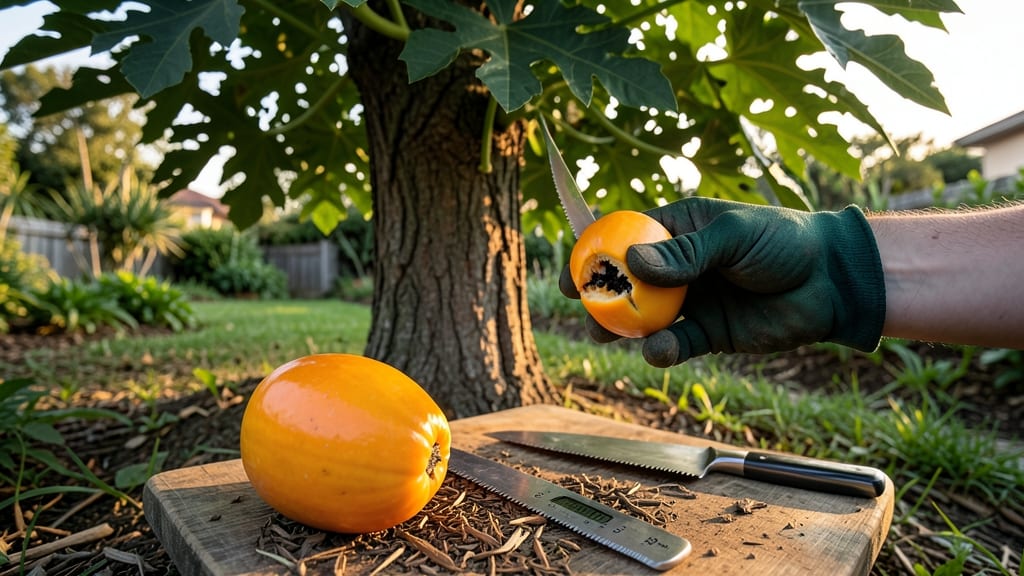
Harvesting papaya at the right time means the difference between creamy-sweet perfection and a mealy, bland disappointment.
Picture this: You’ve nurtured your 🍈 papaya tree for months, and now the fruit is changing color—but how do you know it’s truly ready? One wrong move, and you’re stuck with fruit that’s either rock-hard or mushy.
The good news? With just three simple tactile tests, you can tell exactly when to pluck your papaya for peak flavor.
Most gardeners focus on color alone, but the real secrets lie in the skin’s give, the seed’s maturity, and even the fruit’s weight. These cues don’t just work for home growers—they’re the same tricks commercial farmers use to guarantee sweetness. And since papayas don’t ripen after picking, timing is everything.
Below, I’ll walk you through the three easiest tests to nail harvest timing, plus how to handle varieties like ‘Solo’ or ‘Maradol’ that ripen faster. No guesswork, just perfect papayas every time.
3 Tactile tests to determine papaya ripeness before harvesting
Harvesting papaya at the perfect moment transforms your garden labor into a burst of tropical sweetness. Unlike some fruits that ripen after picking, papayas must be harvested at peak ripeness—because once plucked, they won’t soften further.
The key? Three simple tactile tests that reveal when your fruit is ready to eat. I’ve used these methods for years to avoid the frustration of underripe papayas that taste bland or overripe ones that turn mushy overnight.
Most gardeners focus on color changes alone, but papayas—especially green-skinned varieties like 'Solo'—can fool you. A papaya might look ripe on the outside but still be hard and seedy inside. That’s why I combine skin texture, seed color, and fruit give into a foolproof system.
These tests work for all papaya types, from the small yellow-fleshed 'SunUp' to the large, orange-fleshed 'Maradol' varieties.
Press gently—ripe papayas yield slightly and feel slightly soft near the stem.
Cut open the fruit—ripe seeds turn from white to black.
Press near the stem—ripe papayas yield like a ripe avocado.
The skin color test is your first clue, but it’s not enough on its own. A papaya’s skin can turn yellow or orange while the inside remains hard and seedy. That’s why I always pair it with the fruit give test.
Gently press near the stem—if the skin gives slightly (like pressing a ripe avocado), it’s ready. For green-skinned varieties, this test is even more critical since color changes are subtle.
Next, I check the seed color, which is the most reliable indicator. Cut open the papaya near the stem: ripe seeds should be black and shriveled, not white or plump. White seeds mean the fruit is underripe, while black seeds signal peak ripeness.
Pro tip: If the seeds are black but the flesh still feels firm, let the papaya sit at room temperature for another 1-2 days to fully soften.
For orange-fleshed varieties like 'Maradol,' I combine all three tests. The skin should be fully orange, yield slightly when pressed, and have black seeds.
Green-fleshed varieties like 'Solo' might look ripe when the skin turns yellow, but I always confirm with the seed test—some 'Solo' papayas stay firm until the seeds darken completely.
Timing matters too. In USDA zones 10-12, papayas ripen year-round, but harvest windows vary by variety. 'SunUp' papayas typically mature in 6-8 months, while larger 'Maradol' types take 9-12 months. I’ve found that morning harvests (before 10 AM) preserve fruit quality longer, reducing bruising during transport.
One common mistake? Harvesting based on size alone. A papaya can reach full size but still be underripe. Always combine size, color, texture, and seed color for accuracy. For example, a 'Maradol' papaya might weigh 2 pounds but feel hard until the seeds turn black.
Patience pays off—waiting an extra day for perfect ripeness means a fruit that’s creamy, sweet, and seedless.
If you’re unsure, harvest a few papayas at once and let them ripen separately. Store them at room temperature (not in the fridge) and check daily. Overripe papayas turn mushy and develop a fermented smell, so act fast once you spot those black seeds.
With these tactile tests, you’ll never guess again—just harvest with confidence!
🌱
Best harvesting practices for papayas: when and how to pick
Timing your papaya harvest correctly ensures you get that juicy, sweet flesh instead of a bland or mushy mess. Unlike many fruits, papayas don’t ripen after picking, so harvesting at the wrong stage means wasted effort.
The key? Understanding your variety’s maturity window and using the right tools to pick without damaging the fruit or tree.
Most papaya varieties—like the popular 'Solo' or 'SunUp'—take 365 days to mature, but some like 'Maradol' can be ready in as little as 250 days. Even small differences in timing affect flavor and texture.
Below, I’ll break down the exact harvest windows for common varieties, the tools you’ll need, and how to pick like a pro.
| Variety | Harvest Window (Days) | Color at Harvest | Key Cue |
|---|---|---|---|
| Solo | 365 | Yellow-orange | Skin yields slightly when pressed |
| SunUp | 340-365 | Bright orange | Stem snaps easily when twisted |
| Maradol | 250-300 | Deep red-orange | Seeds turn black |
| Red Lady | 365+ | Pink-orange | Fruit feels heavy for size |
Once you’ve confirmed your papaya is ripe, grab a sharp pruning shear or clean garden shears—never pull the fruit off the tree, as this can damage the stem and reduce future harvests. Cut the fruit 1-2 inches from the stem to avoid tearing the skin.
For large varieties like 'Red Lady', you may need a small ladder or sturdy stool to reach the higher branches safely.
After harvesting, place your papaya in a cool, shaded spot (not refrigerated) to ripen over 2-3 days. If you’re not ready to eat it immediately, store it at 50-55°F for up to 7 days to slow ripening.
Avoid ethylene-producing fruits like bananas or apples nearby, as they can speed up spoilage. With the right timing and care, you’ll enjoy papayas that are sweeter and creamier than store-bought.
Pro tip: If your papaya is still firm after cutting, place it in a paper bag with a ripe banana to speed up ripening naturally. Check daily until the skin yields slightly—this is your cue that it’s ready to enjoy! 🍈