
How To
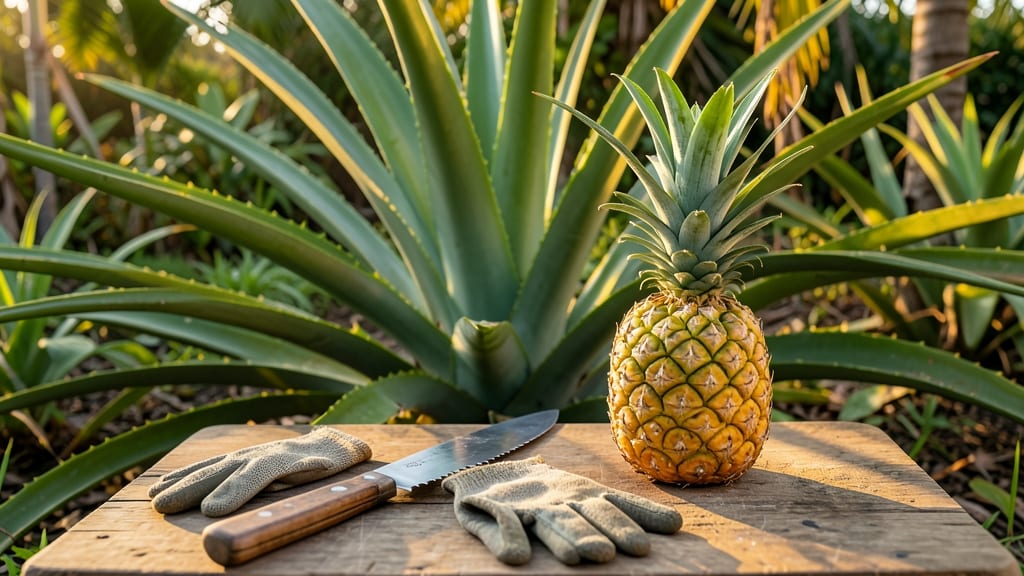
Harvesting pineapple at the right time means the difference between a sweet, juicy 🍍 and a mealy, underripe disappointment — and it’s all about knowing when to pull the trigger.
Picture this: you’ve waited 18-24 months for your pineapple to ripen, only to pick it too early and end up with bland fruit. Or worse, you wait too long and it turns mushy.
The good news? With just three simple tactile tests, you can nail the perfect harvest window every time.
First, check the color: ripe pineapples turn golden-yellow, not just green. Then, give the base a sniff — a sweet, tropical aroma means it’s ready. Finally, gently tug on a leaf near the base; if it comes off easily, your pineapple is at peak ripeness.
In this guide, I’ll walk you through these science-backed methods, plus how climate and growing conditions can shift your harvest timeline. No more guesswork — just perfect, flavor-packed pineapples every time.
3 Tactile tests to determine pineapple ripeness before harvest
Harvesting a pineapple at the right moment transforms a good fruit into an exceptional one. Unlike many fruits that ripen after picking, pineapples must be harvested when fully ripe for the best flavor.
Relying on color alone can be misleading—some varieties stay green even when sweet. Instead, use these three tactile tests to confirm ripeness without cutting into the fruit.
These methods rely on your senses of touch and smell, which are far more reliable than visual cues alone. The leaf pull test, fruit firmness check, and aroma sniff work together to give you a clear signal.
Mastering these will help you avoid the disappointment of underripe or overripe pineapples, ensuring every harvest is a sweet success.
Leaf Pull Test
Gently pull on the bottom leaves. If they come off easily, the fruit is ripe. Resistant leaves mean it needs more time.
Firmness Check
Press the fruit gently near the base. It should yield slightly like a ripe avocado—not too soft, not too hard.
Aroma Sniff
Sniff the fruit’s base. A strong, sweet pineapple scent means it’s ready. No smell? Wait a few more days.
Start with the leaf pull test, as it’s the quickest way to gauge ripeness. Grasp a leaf near the base and tug gently. If it detaches with minimal effort, your pineapple is likely ready to harvest.
This test works because ripe pineapples produce enzymes that weaken the leaf attachments, making them easier to remove.
If the leaves resist, don’t harvest yet. Wait 2-3 days and retest. Overripe pineapples will have leaves that fall off too easily, but the fruit itself may become mushy. Balance is key—aim for that sweet spot where leaves pull away gently but not effortlessly.
Next, perform the firmness check to ensure the fruit isn’t underripe. Press the pineapple’s base with your thumb. A ripe pineapple should feel firm but slightly yielding, like a well-ripened avocado.
If it feels rock-hard, it needs more time on the plant. If it’s overly soft or squishy, it’s past its prime.
Avoid pressing too hard—you don’t want to bruise the fruit. Focus on the base near the stem, as this area concentrates the ripening process. If the fruit feels uneven in firmness, it may not be fully ripe yet.
The final test is the aroma sniff, which is often the most telling. Hold the pineapple’s base close to your nose and take a deep breath.
A ripe pineapple will emit a powerful, sweet fragrance that’s unmistakable. If you detect little to no scent, the fruit isn’t ready—wait another 2-3 days before retesting.
Common mistakes include harvesting based on color alone or ignoring the scent. Some pineapple varieties, like Sugarloaf, stay green even when ripe. Trust your nose and fingers over what you see. If the aroma is faint but the other tests pass, give it one more day.
Once all three tests confirm ripeness, harvest your pineapple by cutting the fruit about 1 inch above the base. Use a sharp, sterilized knife to avoid damaging the plant. After harvesting, store it at room temperature for a few days to let residual sugars develop fully.
Practice these tests on a few pineapples to refine your touch. With time, you’ll develop an intuitive sense for when a pineapple is at its peak—ready to deliver that unmatched tropical sweetness.
🍍How climate and growing conditions affect pineapple harvest timing
Your pineapple’s ripening timeline isn’t set in stone—it’s heavily influenced by climate and growing conditions. In tropical zones like Hawaii or Florida, pineapples mature year-round, while in temperate climates (like California’s coastal regions), they take longer to ripen due to cooler temperatures.
Even sunlight exposure and temperature fluctuations can shift your harvest window by weeks.
For example, pineapples grown in USDA Zones 10-12 (tropical climates) typically ripen in 18-20 months, while those in Zone 9 or cooler (like greenhouses in Arizona) may take 22-24 months. The key difference? Sugar development slows in cooler weather, delaying ripeness.
If you’re growing pineapples in containers indoors, expect even longer maturation—sometimes up to 30 months—because limited sunlight and temperature control stunt growth.
| Climate Type | Average Ripening Time | Key Conditions | Adjustments Needed |
|---|---|---|---|
| Tropical (Zones 10-12) | 18-20 months | Year-round warmth, 6+ hours sun, high humidity | Harvest anytime; test ripeness weekly |
| Temperate (Zones 8-9) | 20-24 months | Cooler winters, 5-6 hours sun, dry seasons | Extend growing season with greenhouse; test scent more often |
| Greenhouse/Indoor | 24-30 months | Controlled temps, artificial grow lights, low humidity | Supplement with grow lights; monitor firmness closely |
Sunlight is the most critical factor in ripening speed. Pineapples need 6+ hours of direct sunlight daily to develop optimal sugar levels. In shady spots, fruits may stay green and tart, even after 24 months.
If you notice your pineapple’s leaves turning yellow or growing spindly, it’s a sign of light deficiency. Move the plant to a sunnier location immediately—this can add 2-4 extra months to ripening if corrected late.
Temperature also plays a surprising role. Pineapples thrive in 75-85°F (24-29°C) but struggle below 60°F (15°C). In cooler climates, growth slows dramatically during winter, delaying harvest by 3-6 months.
For example, if you plant in March in Zone 9, expect harvest in late 2024 or early 2025—not the same year. Use row covers or greenhouses to maintain warmth and accelerate ripening.
Humidity matters too. Low humidity (common in desert climates) can cause sugar crystallization in the fruit, making it taste grainy. If you’re in a dry area, mulch heavily around the base to retain moisture and consider mist irrigation during hot afternoons.
In humid tropical climates, focus on airflow to prevent fungal issues that can rot the fruit before ripening.
Adjust your harvest expectations based on these factors. In tropical climates, you can harvest year-round, but in temperate zones, aim for late spring to early fall when temperatures are most stable.
Always combine climate knowledge with the tactile tests from Section 1—no matter where you grow, the leaf pull, firmness, and aroma tests remain your best tools for timing the perfect harvest.
🌡️☀️