
How To
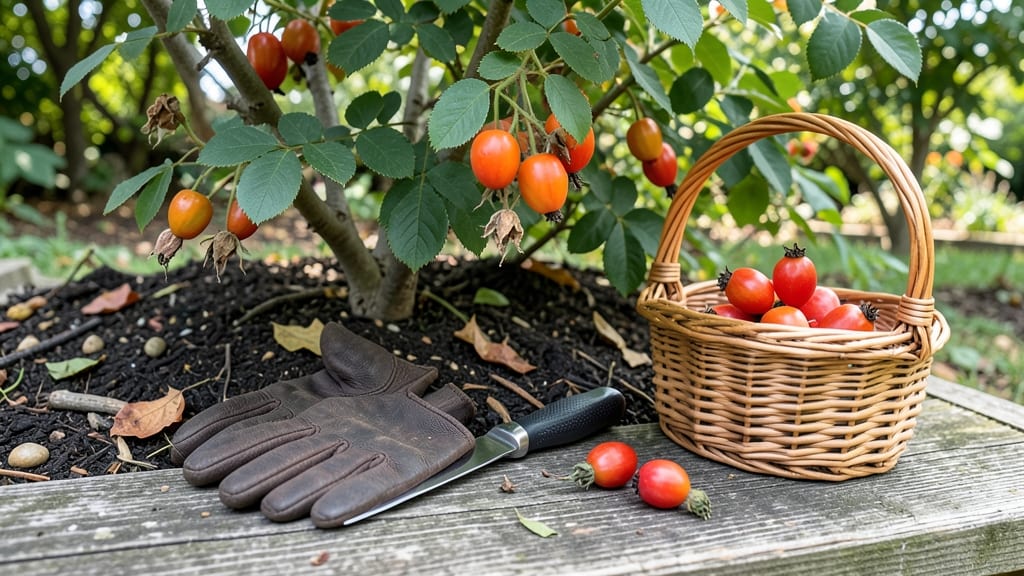
Harvesting rose hips at the right time ensures you capture their peak vitamin C and antioxidant levels 🌹 — and missing that window means bitter, underripe fruit or shriveled husks.
Picture this: you’ve waited all season for those bright orange hips to swell, only to find they’re either too hard or already splitting open. The difference between a perfect harvest and wasted effort comes down to three simple tactile tests—color, texture, and seed development.
In most regions, including USDA Zone 6a, the ideal window falls between September and October, but early frosts or late blooms can shift that timeline. Whether you’re growing Rosa rugosa or a classic Rosa canina, knowing these cues will save you from empty-handed work.
Below, I’ll walk you through exactly how to check ripeness, adjust for your local climate, and store your harvest to preserve those nutrients for tea, jams, or even wildlife-friendly treats.
3 Tactile tests to determine when rose hips are ready for harvest
Harvesting rose hips at the perfect moment ensures you capture their peak nutritional value—packed with vitamin C, lycopene, and antioxidants. But how do you know when they're truly ready? Unlike many fruits, rose hips don’t ripen after picking, so timing is everything.
The key lies in three simple tactile tests: color, texture, and seed development. These hands-on checks work for all rose varieties, from Rosa rugosa (with its bright orange hips) to Rosa canina (classic deep red).
First, understand that rose hips mature gradually—often over 4–6 weeks—depending on your climate zone and rose type. In cooler regions (USDA zones 3–5), hips may take longer to ripen, while warmer zones (7–10) can see faster maturation.
Even within the same garden, Rosa rugosa hips might ripen 2–3 weeks earlier than Rosa canina. That’s why tactile tests are your best friend for precision harvesting.
Here’s the game-changer: don’t rely on color alone. A hip might look red but still be hard and underripe inside. Or it could be overripe and shriveled if left too long.
The texture test and seed check reveal the truth—because nutrient density peaks when all three signs align. Let’s break it down step by step.
🌿 Color Test
Look for a uniform deep red or orange (not patchy green). Rosa rugosa hips turn bright orange, while Rosa canina stay deep red.
🤏 Texture Test
Gently press the hip—it should yield slightly (like a ripe tomato) but not feel mushy. If it’s hard, it’s underripe; if soft and squishy, it’s past its prime.
🌱 Seed Development
Cut open a hip—if the seeds are fully formed and visible through the translucent skin, it’s ready. Underripe hips have small, undeveloped seeds; overripe ones may have shriveled seeds.
Let’s talk about Rosa rugosa—this variety is a powerhouse for early harvesting. Its orange hips often ripen in late August to early September, even in cooler climates. I’ve seen them ready weeks before other roses, especially in USDA zone 6.
The trick? Check weekly starting in August. For Rosa canina, wait until September–October, when the hips turn a rich, wine-red. Pro tip: Morning harvests work best because hips are firmer and cooler, making them easier to handle.
Texture is where many gardeners trip up. A firm but slightly soft hip is ideal—think of it like a ripe avocado (but without the pit!). If you press and feel no give, the hip isn’t ready. If it squishes easily, it’s overripe and may spoil faster.
This test is especially critical for medicinal uses, like teas or syrups, where potency matters. For culinary uses (jams, jellies), slightly firmer hips hold up better during cooking.
Don’t overlook the seed check—it’s the ultimate litmus test for ripeness. When seeds are fully developed, the hip’s nutrient profile is at its peak. I once harvested a batch of Rosa rugosa hips that looked perfect but had underdeveloped seeds.
After drying, they tasted bland and lacked the usual tang. Lesson learned: always verify internally. For wild roses or less predictable varieties, this step is non-negotiable.
Seasonal timing varies wildly by climate zone. In warmer zones (8–10), like Southern California or Florida, hips may ripen as early as late July.
In cooler zones (3–5), such as upstate New York or Montana, you might not see ready hips until October or even November. Frost risk is your enemy—if a hard freeze is forecast, harvest immediately, even if not perfectly ripe, to salvage your crop.
In my zone 6 garden, I’ve had to rush harvests in early October to avoid frost damage.
Here’s a pro move: harvest in stages. Pick a few hips weekly starting in late August and monitor their development. This way, you’ll catch the sweet spot for each variety in your garden.
Store them in a cool, dry place (like a mesh bag) until you’ve confirmed ripeness on a sample. And remember—gloves are a must! Rose hips can stain, and some varieties (like Rosa rugosa) have thorns sharper than a cactus.
Once you master these three tactile tests, you’ll never second-guess your rose hip harvest again. The difference between peak nutrition and wasted effort comes down to these simple checks.
Next time you’re strolling through your garden in September, grab a handful, and let your fingers do the talking. Your tea, jams, and tinctures will thank you! 🌹
Optimal harvest timing: seasonal and climate-specific guidelines
Your rose hips ripen at different rates depending on your USDA zone and altitude, so adjusting your harvest timeline is key.
In Zones 3–5, early frosts can push your window to late August or early September, while Zones 7–10 may extend it until November—just before the first hard freeze.
For example, Rosa rugosa in coastal Zone 8 often ripens 2–3 weeks later than inland varieties due to milder temperatures.
At higher elevations (above 5,000 feet), cooler temperatures slow ripening, so hips may need 10–14 extra days to mature. Conversely, lowland Zone 10 gardens can harvest Rosa canina hips until December if protected from light frosts.
Always monitor local first frost dates—harvesting just before frost ensures you capture fully developed hips without risking split or frozen fruit.
🌿
| USDA Zone | Rose Type | Harvest Window | Altitude Adjustment | Frost Risk Note |
|---|---|---|---|---|
| 3–5 | Rosa rugosa, canina | Late August–Early September | Add 7–10 days per 1,000 ft | High; harvest before first frost |
| 6–7 | Rosa gallica, rugosa | Mid-September–October | Standard timing | Moderate; protect from light frosts |
| 8–10 | Rosa canina, hybrid teas | Late September–November | Subtract 5–7 days per 1,000 ft | Low; extend harvest if mild |
Early-season varieties like Rosa rugosa often ripen first, followed by Rosa canina and hybrid teas. If you’re growing multiple types, stagger your harvests by 1–2 weeks to maximize yield.
In Zone 6a, where I garden, I prioritize Rosa rugosa in early September and leave Rosa canina until late October—just before the first hard freeze typically hits around October 20.
For high-altitude gardens (above 6,000 feet), hips may not fully ripen until October or November, so start checking for deep red/orange color and slight softness in late September.
In Zone 10, where winters are mild, you can sometimes harvest into December, but watch for fungal risks from prolonged moisture. Always pick on dry mornings to avoid spreading disease.
Pro tip: Mark your calendar with your local first frost date and count backward 4–6 weeks to set your harvest deadline. This ensures you don’t miss the window—especially if you’re relying on hips for wildlife food sources or homemade remedies.
Overripe hips split open and lose nutrients, so timing is everything!
☀️