
How To
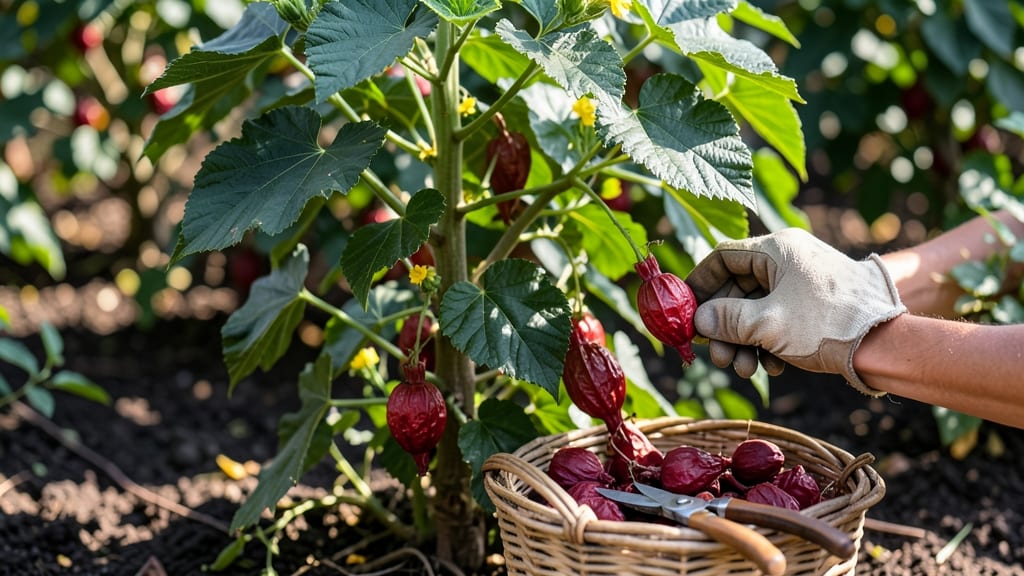
Harvest roselle calyx when the buds turn deep red and measure 2-3 inches—that’s the sweet spot for maximum tartness and crisp texture.
Picking too early means watery, bland calyxes, while waiting too long turns them woody and bitter. I’ve made both mistakes, and trust me, the flavor difference is night and day.
In USDA Zone 6a, aim for late September to early October, but tropical climates can stretch the harvest into November. The key is watching for those vibrant color shifts and firm-but-yielding skin.
Below, I’ll walk you through the three visual cues that guarantee perfect timing, plus how to handle your harvest to keep those calyxes fresh and flavorful.
3 Visual cues to identify perfect roselle calyx harvest time
Harvesting roselle calyces at the right moment ensures that signature tartness and crisp texture you crave. Miss the window, and you’ll end up with either underripe, bland buds or overripe, mushy calyces. The key lies in watching for three expert-approved visual cues that signal peak ripeness.
These cues make all the difference between a mediocre harvest and a bounty of vibrant, flavorful calyces ready for your kitchen or market.
First, focus on the color transformation of the calyx. When roselle buds mature, they shift from green to a deep, rich red or purple hue. This isn’t just about aesthetics—it’s a clear indicator that the calyx has developed its full tart flavor profile.
Ignoring this shift means risking a harvest that lacks the boldness you’re after. Pair this with the bud’s size and firmness, and you’ve got a foolproof system for timing your pick perfectly.
Here’s how to spot the perfect harvest window using three simple visual checks that guarantee the best roselle calyces:
-
1. Deep Color Shift
Look for deep red or purple calyces (not green or partially open). This signals full maturity and peak tartness. -
2. Bud Size (2-3 inches)
Harvest when calyces are 2-3 inches long and fully closed. Smaller buds are underripe; larger ones may be overripe. -
3. Stem Readiness
Gently bend the stem—it should snap cleanly at the base. If it resists, the calyx isn’t ready yet.
Let’s break down why these cues matter. The color shift isn’t just about looks—it’s a biological signal that the calyx has reached its optimal sugar-to-acid ratio. Deep red or purple means the plant has stopped producing chlorophyll and is now focusing on flavor development.
Skipping this step means you’re harvesting before the calyx has had a chance to develop its signature tartness, which is what makes roselle so beloved in teas, jams, and stews.
Next, pay attention to the bud size. When roselle calyces reach 2-3 inches in length, they’re at their prime. Anything smaller is still maturing, and you’ll miss out on that crisp texture that’s so satisfying.
On the flip side, if you wait too long, the calyx may open and dry out, losing its vibrant color and becoming woody or tough. This is where many gardeners go wrong—they assume bigger is better, but in roselle’s case, size matters but timing is everything.
Finally, the stem readiness test is a game-changer. When you gently bend the stem and it snaps cleanly at the base, that’s your green light to harvest. This indicates the calyx has fully detached from the plant’s nutrients and is ready to be picked.
If the stem resists, it’s not ready yet. This simple test saves you from harvesting too early or too late, ensuring you always get the best possible yield.
Pro tip: Combine these cues with the time of day. Harvesting in the early morning (before 9 AM) gives you the freshest calyces, as they’ve had the night to cool down and retain moisture.
Avoid harvesting in the afternoon when the sun can make the calyces overly soft or wilted. This small adjustment can make a big difference in post-harvest quality.
Once you’ve mastered these three visual cues, you’ll never second-guess when to harvest roselle again. The result? A garden full of vibrant, tart, and crisp calyces that are perfect for preserving, cooking, or enjoying fresh.
Plus, you’ll save time by avoiding the trial-and-error approach that often leads to wasted harvests. Happy harvesting!
🌿
Harvesting mistakes that ruin roselle flavor and yield
Harvesting roselle calyces at the wrong stage can turn that vibrant tartness into a bland, mushy mess. I’ve seen gardeners lose entire harvests by ignoring simple cues—like overripe buds or incorrect cutting techniques—that compromise both flavor and plant health.
The key is timing: pick too early, and you get underdeveloped, watery calyces; wait too long, and they turn woody or bitter.
Even the cutting angle matters. A jagged snip can damage the plant, inviting pests or disease. And let’s not forget how weather conditions play a role—harvesting after rain can dilute flavor, while midday heat stresses the plant.
These mistakes aren’t just annoying; they can reduce your yield by up to 40% if you’re not careful.
⚠️ Warning: Overripe Roselle Buds Are a Flavor Killer
Harvesting roselle calyces after they open or turn brown ruins their tartness and makes them woody or bitter. The ideal window? When the calyx is deep red/purple, 2-3 inches long, and firm but yielding when gently squeezed. Waiting even 24 hours past this stage can turn your harvest into a disappointment.
One of the biggest mistakes I see is harvesting with dull shears. A clean cut just above a leaf node encourages new growth, while a ragged cut invites infections. Always use sterilized pruners or sharp scissors, and avoid tearing the calyx—this damages the plant’s ability to produce more buds.
I’ve also noticed gardeners pulling calyces instead of cutting; this can uproot the plant or leave jagged stems that heal poorly.
Timing your harvest to the right time of day also makes a difference. Morning harvests preserve tartness better than afternoon ones, when heat can make the calyces wilting or overly soft. I recommend harvesting between 7 AM and 9 AM on dry, cloudless days.
Avoid harvesting after rain, as excess moisture can dilute flavor and encourage mold. Even the season matters: in tropical climates, roselle thrives year-round, while temperate zones need to harvest before the first frost.
Another common error is overcrowding the plant during harvest. Leaving too many calyces on the plant at once stresses it, reducing both yield and quality. Aim to harvest every 3-5 days once the plant starts flowering, focusing on the largest, most mature calyces first.
This encourages the plant to produce more buds and keeps the flavor consistent. I’ve found that pruning spent flowers also helps—this redirects the plant’s energy toward new growth rather than seed production.
Finally, don’t ignore the post-harvest handling. Storing freshly harvested calyces in the fridge for more than 5 days can degrade their texture and tartness. For long-term storage, dry them in a well-ventilated, shady spot for 3-5 days or use a dehydrator at 135°F (57°C).
Proper handling ensures you enjoy that bright, hibiscus-like tang even after the harvest season ends.