
Vegetables
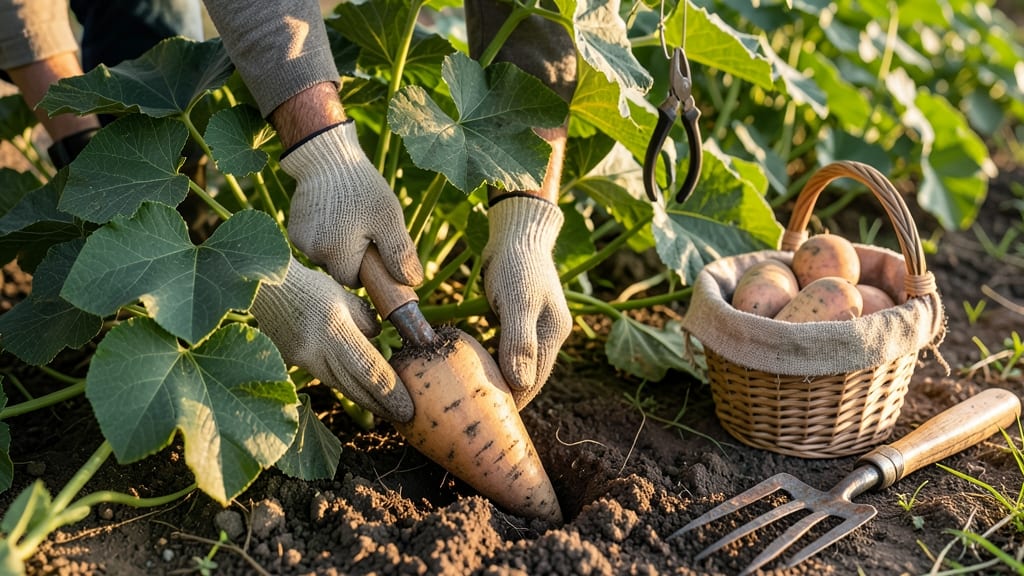
Harvest sweet potatoes in Texas when soil temperatures hit 60-65°F and vines start yellowing—this 90-120 day window is your ticket to perfect, starchy roots.
Miss that timing, and you risk woody, bitter tubers or shriveling from Texas heat. I’ve dug up overripe sweet potatoes that tasted like cardboard because they baked in the sun too long—don’t let that happen to you.
Texas gardeners face unique challenges: humidity in East Texas speeds up spoilage, while North Texas frosts force early harvests. The key is checking soil temps daily and watching for those telltale yellow leaves.
Below, I’ll show you how to use a soil thermometer, spot the 5 key signs your 🍠 are ready, and avoid Texas-specific harvest mistakes that ruin your crop.
How to use a soil thermometer to determine perfect Texas sweet potato harvest time
A soil thermometer is your secret weapon for harvesting Texas sweet potatoes at peak flavor. Unlike other states, Texas' extreme heat and variable climate zones demand precise timing. The ideal harvest soil temperature sits between 60-65°F—this sweet spot ensures maximum starch content while preventing woody textures.
Without proper monitoring, you risk harvesting too early (underdeveloped roots) or too late (bitter, fibrous tubers). Let's break down how to read your soil thermometer like a pro.
First, understand why soil temperature matters more in Texas than most places. Our USDA zones 8a-11 create dramatic differences: North Texas can drop to 55°F nights while South Texas might hit 90°F+ soils.
A soil thermometer (available for $10-$15) measures the actual growing zone where roots develop—surface temps can be misleading. Check temperatures at 6 inches deep (where most sweet potato roots form) during the golden hours of 10 AM-2 PM when readings are most stable.
Here's how to use your thermometer effectively: Insert the probe 6 inches deep near your plants (but not touching roots) and wait 30 seconds for an accurate reading. Record daily temps in a small notebook—this creates a pattern that helps predict harvest windows.
For early varieties (like 'Beauregard'), aim for harvest when temps consistently hit 60-65°F for 3-4 days. Late varieties (like 'Centennial') can tolerate slightly warmer soils up to 68°F.
🌱Pro Tip: Texas gardeners often miss the harvest window because they focus on vine color rather than soil conditions. The vines might yellow at 68°F (perfect for North Texas), but the same plants in East Texas could be overripe by then due to humidity accelerating growth.
Always cross-reference vine health with your soil thermometer readings.
| Soil Temperature (°F) | Harvest Readiness | Texas Climate Notes |
|---|---|---|
| 55-59 | Too early (starchy) | North Texas (cooler nights) |
| 60-65 (Ideal) | Perfect timing | Best window for Hill Country |
| 66-70 | Slightly sweet but risk of sprouting | East Texas (humidity risk) |
| 70+ | Overripe (woody) | South Texas (heat stress) |
Let's adapt this to Texas' three main climate regions. In North Texas, where nights can drop below 60°F, harvest when morning soil temps stabilize at 62°F—this prevents chilling injury to tubers. The Hill Country offers the sweetest harvest window: aim for 60-65°F during September's cooler mornings.
For East Texas, humidity means roots mature faster—watch for 63-66°F soils and harvest within 24 hours of optimal temp to avoid sprouting. South Texas gardeners should never let soils exceed 68°F for more than 48 hours or risk developing bitter, fibrous tubers.
Adjust your harvest timing based on variety maturity too. Early varieties like 'Georgia Jet' (90 days) pair best with North Texas' cooler soils, while late varieties like 'Vardaman' (120 days) thrive in South Texas' extended growing season. My personal trick?
Plant both early and late varieties in the same bed. When the early ones hit 60-65°F soils, harvest them immediately. The late varieties will still have 2-3 weeks of optimal growing conditions before their peak harvest window.
🌡️Critical Adjustment: Texas' 100-degree days can fool you—surface temps may read high, but 6-inch-deep soils often stay in the ideal range. Always check your thermometer at soil level, not surface level.
I've seen 110°F surface temps with 65°F soils during peak summer—this is why your thermometer is non-negotiable for perfect harvests.
For container-grown sweet potatoes (common in urban Texas gardens), soil temps rise faster. Monitor these plants daily—they reach harvest readiness 10-14 days earlier than in-ground plants. The same 60-65°F rule applies, but container soils dry out quicker, so maintain even moisture.
Pro tip: Use black plastic mulch around containers to stabilize soil temps and extend your harvest window by 1-2 weeks.
Finally, combine your soil thermometer readings with visual cues. When your soil hits 60-65°F AND you see 70% vine yellowing, it's time to harvest. For North Texas, this typically falls in late September to October; in South Texas, you might extend until mid-November. Always harvest before first frost—even our hardiest varieties suffer damage below 50°F. With this method, I've
5 Key visual and physical signs your Texas-grown sweet potatoes are ready to harvest
Texas gardeners know timing is everything when harvesting sweet potatoes. Unlike cooler climates, our long growing seasons and variable rainfall demand sharp eyes for the perfect harvest window.
Miss the cues, and you risk woody tubers or underdeveloped roots. Here’s how to spot when your sweet potatoes are ready to pull from the soil.
First, understand that Texas heat accelerates growth. What might take 100 days in the Northeast can happen in just 85 days in South Texas. Pay attention to vine behavior, leaf color, and root development—these are your best indicators.
The moment you see these five key signs, grab your fork and start digging!
Don’t ignore the leaf drop pattern. While 70% yellowing is ideal, complete browning means you’ve waited too long. In East Texas humidity, vines may stay green longer—dig a test root to confirm size.
Pro tip: Use a digging fork to avoid damaging roots, especially in rocky soil common in Hill Country.
Texas gardeners also need to account for soil conditions. After heavy rainfall, sweet potatoes can split or rot if harvested too soon. Wait until the soil is dry enough to crumble in your hands.
For drought-prone areas, irrigation just before harvest can plump up tubers for better storage life.
Once you’ve confirmed all five signs, harvest on a sunny morning to let roots dry slightly before curing. Store them in a warm (80-85°F), humid-free space for 10 days to develop sweetness. Texas humidity makes curing tricky—use a ventilated basket or greenhouse if needed.