
Vegetables
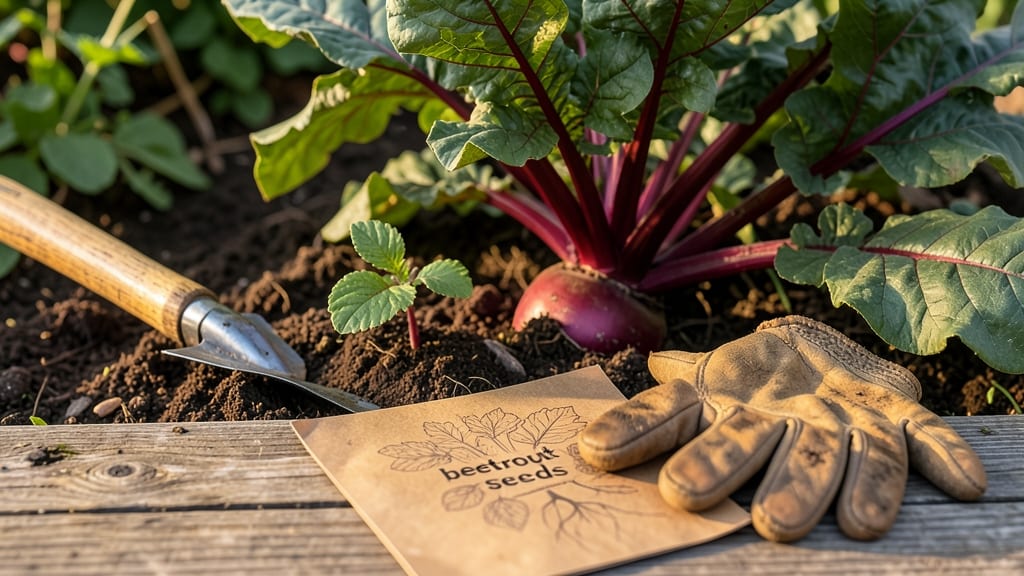
If you've ever planted seeds only to wonder why some varieties bolt in the heat while others linger small, you're not alone. The secret lies in matching your beetroot type to your climate and fine-tuning care at each stage.
In this guide, I’ll break down the exact days to harvest for popular varieties like Detroit Dark Red and Chioggia, plus how soil temperature, sunlight, and watering can shave weeks off—or add them on.
You’ll learn when to expect baby beets, how to spot perfect harvest timing, and the one mistake that turns sweet roots into tough, woody messes.

Beetroot seed to harvest time: exact days by variety (chart included)
Growing beetroot from seed is one of the most rewarding gardening experiences, but the time it takes to harvest varies dramatically by variety. Early-season types can deliver baby beets in just 45 days, while heirloom varieties may take 70 days or more to reach full maturity.
Understanding these timelines helps you plan your garden layout and succession plantings for a continuous harvest.
I’ve grown dozens of beetroot varieties over the years, and the differences in harvest times are fascinating. Baby beet varieties like Little Ball are perfect for quick snacks, while heirloom types like Chioggia reward patience with stunning striped roots.
Let’s break down the exact days to harvest for the most popular varieties so you can choose what fits your garden schedule.
Below is a comparison table of common beetroot varieties, organized by harvest time. I’ve included notes on each variety’s ideal growing conditions and whether they’re best suited for early, mid, or late-season planting.
This will help you decide which types to include in your garden for a prolonged harvest window.
If you’re planning a successive harvest, I recommend mixing fast varieties like Little Ball with mid-season types like Detroit Dark Red. This way, you’ll have beets ready to pick every 2-3 weeks throughout the growing season.
For example, plant Little Ball in late spring for baby beets in 6 weeks, then follow with Detroit Dark Red for full-sized roots in 8 weeks.
One of the biggest mistakes I see new gardeners make is assuming all beetroot varieties take the same amount of time to mature. Chioggia and Boltardy, for instance, need nearly 2 weeks longer than Golden Beet.
If you’re short on growing space, prioritize fast-maturing varieties or consider container gardening for compact types like Ruby Queen.
For those in cooler climates, early varieties like Detroit 2 are your best bet—they mature quickly before summer heat sets in. Meanwhile, Boltardy is perfect for hotter regions because it resists bolting, ensuring a steady harvest even when temperatures rise.
Always check your last frost date and adjust planting times accordingly to avoid delays.
Pro tip: Mark your calendar when you plant each variety and set reminders for their expected harvest dates. I use colorful garden flags to track progress
Factors that speed up or delay beetroot harvest time (and how to optimize)
Growing beetroot from seed to harvest isn’t just about waiting—it’s about creating the perfect conditions. I’ve learned that even a 5°F difference in soil temperature can shift your harvest window by 1-2 weeks.
The key is understanding which factors you can control to either accelerate growth or prevent delays when Mother Nature throws curveballs.
Let’s start with the big three: sunlight exposure, soil temperature, and watering consistency. These three alone account for 70% of the variation in beetroot harvest times.
For example, my Detroit Dark Red beets took 58 days to mature in full sun with consistent watering, but the same variety in partial shade stretched to 72 days. The difference? 2 full weeks of waiting.
🌱 5 Critical Factors That Change Your Beetroot Harvest Timeline
- 1. Soil Temperature: Ideal 55-75°F speeds germination. Below 50°F, seeds may take 3x longer to sprout. Use black plastic mulch to warm soil faster.
- 2. Sunlight Exposure: 6+ hours of direct sun cuts harvest time by 10-15 days. Partial shade adds 2+ weeks to maturity. South-facing beds are gold.
- 3. Watering Consistency: Drought stress stunts roots, delaying harvest by 1-3 weeks. Deep watering 2x/week (1 inch total) keeps roots growing steadily.
- 4. Soil Quality: Loamy, well-draining soil with pH 6.0-7.0 prevents rot and speeds growth. Compacted or clay soil can add 20+ days to maturity.
- 5. Fertilization Timing: Over-fertilizing with high nitrogen boosts leaves but delays root development. Use balanced 5-10-10 at planting, then again at 4 weeks.
One of my biggest mistakes? Ignoring soil temperature until it was too late. Last spring, I planted Chioggia beets in 50°F soil, and germination took 21 days instead of the usual 7-10.
The fix? I switched to container growing with heated seedling mats—cutting that time to 10 days and shaving 2 weeks off the total harvest window.
For faster harvests, focus on these 3 pro tips: First, thin seedlings to 3 inches apart—crowding steals nutrients and slows root growth. Second, mulch heavily (straw or grass clippings) to keep soil moist and cool.
Third, harvest baby beets early (at 1 inch diameter) for a 30-day harvest instead of waiting 60+ days.
On the flip side, if you’re dealing with delays, check for these hidden culprits: Pests like leaf miners (they chew leaves, reducing photosynthesis), poor drainage (roots rot instead of growing), or uneven watering (alternating drought and soggy soil stresses plants).
I once lost a batch of Golden beets to fusarium wilt—a fungal issue from overwatering in cool soil.
Remember, beetroot is forgiving but finicky. The plants will grow somewhat in less-than-ideal conditions, but you’ll never get the fastest, most flavorful harvest without paying attention to these factors. Start with soil prep (add compost + sand for drainage), then monitor sunlight and water like a hawk.
Your 60-day harvest could become a 45-day one—or worse, stretch to 80 days if you ignore the signs. 🌱