
Picking
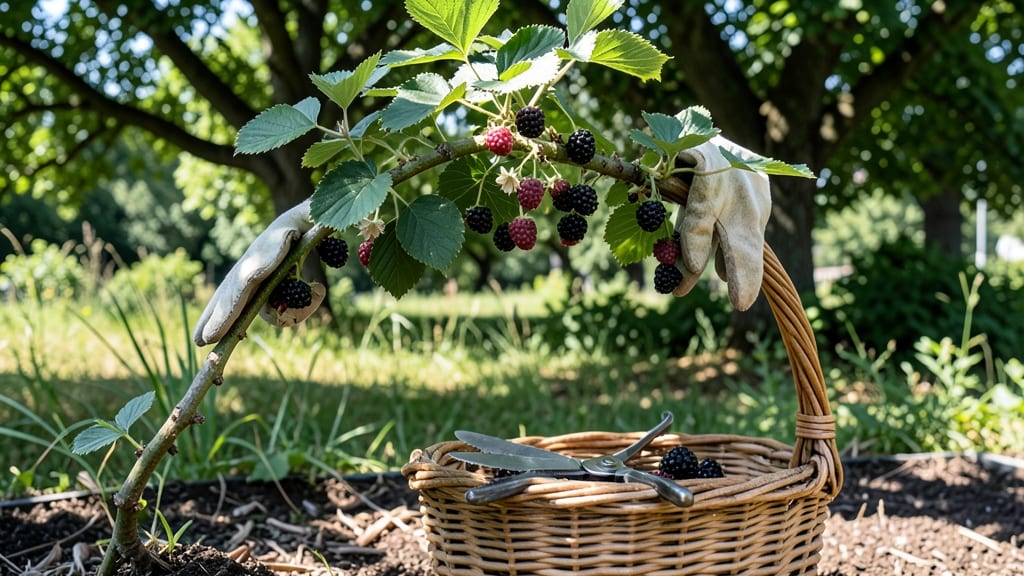
Summer marks the blackberry harvest season in the Northern Hemisphere 🫐, but timing can make or break the flavor—especially when heatwaves and regional climates throw off ripening schedules.
Picture this: you’ve been waiting all season for those deep purple berries, only to find they’re tart and mealy instead of sweet and juicy.
That’s what happens when you miss the perfect harvest window, which shifts by weeks depending on whether you’re in the Pacific Northwest, the Midwest, or Southern Europe.
In this guide, I’ll break down the exact months for peak blackberry harvests by region, the telltale signs of ripeness (and overripeness), and how to beat summer’s heat to maximize your yield.
You’ll also discover how sunlight, temperature, and even rainfall play a role—and why some varieties ripen weeks earlier (or later) than others in your area.
Exact blackberry harvest months by Northern Hemisphere region for maximum flavor
Getting your blackberry harvest timed just right ensures those sweet, juicy berries burst with flavor instead of turning mushy or mealy. The Northern Hemisphere offers diverse climates, and understanding your region’s peak harvest windows is key to avoiding disappointment.
Whether you’re in the Pacific Northwest or Mediterranean Europe, knowing when to pick can mean the difference between a perfectly ripe berry and one that’s past its prime.
Summer heatwaves and rainfall patterns dramatically shift blackberry ripening schedules, so I’ll break down the exact months for early, mid, and late summer harvests across key regions.
Pro tip: Heatwaves can accelerate ripening by 1–2 weeks, while excessive rain may delay it, so stay alert to your local weather trends.
In the Pacific Northwest, like Oregon and Washington, blackberries typically ripen in late June through mid-August. The cooler climate means berries take longer to mature, but heatwaves in July can push ripening forward by 1–2 weeks.
If you’re growing Thornless Evergreen varieties, watch for uniform black color and a slight give when gently squeezed—this is your cue to harvest.
For Midwestern gardeners in states like Illinois or Ohio, the harvest window shifts slightly earlier, with early July to late August being prime time. Here, drought conditions can stress plants, so keep soil consistently moist to avoid small, tart berries.
If your berries start ripening unevenly, it’s often a sign of inconsistent watering or nutrient deficiencies.
In the Southeastern U.S., including Georgia and Florida
How to time blackberry picking for perfect ripeness (and avoid common mistakes)
Blackberries ripen quickly in summer's heat, making precise timing essential for peak flavor. Miss the window, and you risk tart, mealy berries or rotting clusters from overripeness. The key lies in combining visual cues, touch tests, and environmental signals—not just guessing by color alone.
I’ve learned the hard way that even 12 hours too late can turn sweet berries into mushy disappointments.
Start by checking the berry color—fully ripe blackberries should be deep black, purple, or red (depending on variety) with no green patches. But color alone isn’t enough; some varieties like Triple Crown stay red even when ripe.
That’s where the touch test comes in: gently squeeze the berry—it should yield slightly, like a ripe peach, not feel rock-hard or mushy.
⚠️ callout warning
Harvesting blackberries during peak summer heat (85°F+) or after heavy rain can ruin your crop. Overripe berries ferment quickly—look for shriveled skins or white powdery mold (signs of botrytis). Early morning is ideal for picking to avoid sunburned berries and to maximize shelf life.
💡 Pro Tip: If humidity is high, harvest every 2–3 days to prevent rot.
Pay attention to the environmental signals too. Blackberries ripen fastest in 75–85°F temperatures with moderate humidity. If your area hits a heatwave above 90°F, berries may overripen in 24–48 hours. Conversely, cool (65°F) or rainy days slow ripening—wait for sunny, dry mornings to pick.
I once lost an entire Chester variety cluster because I ignored a 3-day heatwave and came back to a moldy mess.
Another critical cue is the berry’s detachment. Ready-to-pick blackberries should pluck off easily with a slight twist or tug—no stubborn clinging. If the berry resists, it’s underripe; if it falls apart in your hand, it’s overripe.
This test is foolproof for varieties like Natchez, which ripen unevenly. Pro tip: Use clean, sharp scissors to snip stems if berries are too delicate.
Watch the leaves and plant behavior too. When berries are ripe, the canes may stop growing, and nearby leaves might start yellowing slightly. This signals the plant is redirecting energy to ripening.
I noticed this pattern with my Triple Crown bushes—once the leaves turned a dull green, I knew it was time to harvest daily for 5–7 days to catch the full crop.
Finally, avoid these common mistakes: picking berries in direct sunlight (they bruise faster), storing them in plastic bags (traps moisture), or waiting until every berry on a cane is ripe (some varieties ripen in waves).
For storage, keep picked berries in a single layer on a tray in the fridge—this prevents crushing and extends freshness by 3–5 days. With these tricks, you’ll go from guessing to mastering the perfect blackberry harvest. 🫐