
Picking
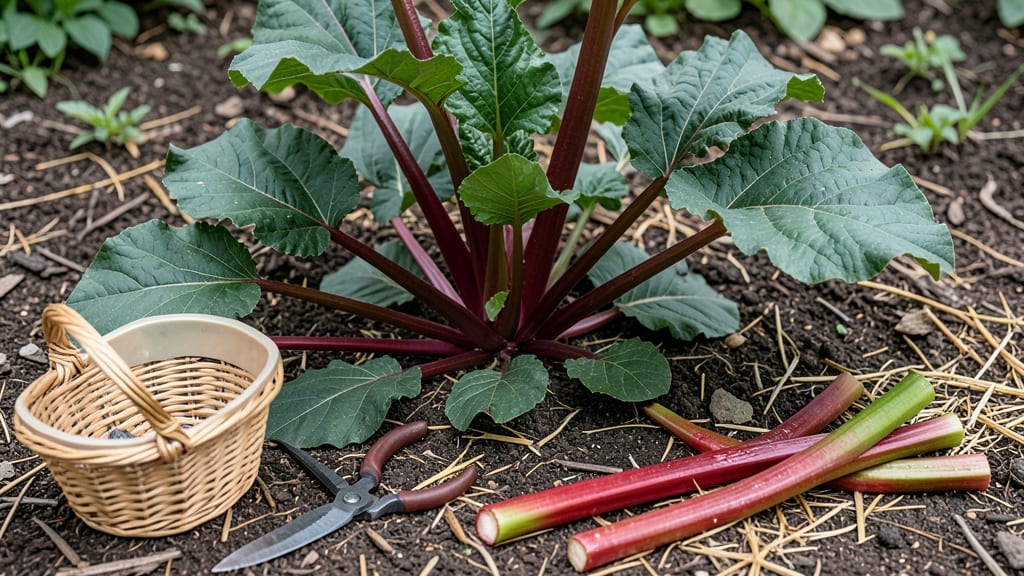
The harvest time for rhubarb arrives when those vibrant stalks snap cleanly at the base—your cue to pull them before they toughen up and lose their signature tenderness.
Picture this: you twist a stalk, and it breaks with a crisp pop instead of bending like a green bean. That’s the moment you’ve been waiting for, and missing it means fibrous, less sweet stems that’ll have you second-guessing your gardening skills.
The good news? This 6-8 week window in late spring to early summer is your chance to get it right.
But timing isn’t just about the calendar—it’s about the plant’s maturity. A rhubarb 🍃 in USDA Zone 6a needs at least two years to build strong roots before it delivers its best harvest. Pull too early, and you’ll stunt its growth; wait too long, and those stalks turn woody.
The secret? The snap test, a foolproof trick that tells you exactly when to harvest for peak flavor.
In this guide, I’ll walk you through the perfect harvest window, how to perform the snap test like a pro, and the 3 biggest mistakes that turn sweet rhubarb into tough scraps.
Whether you’re a first-timer or a seasoned gardener, you’ll leave here knowing exactly when to twist—and when to wait.

When to harvest rhubarb: ideal season and plant age
Rhubarb is one of those magical garden plants that rewards patience—especially when it comes to harvesting. The ideal harvest window for rhubarb typically falls between late spring and early summer, usually May through June in most U.S. growing zones.
This timing ensures you're harvesting when the stalks are at their peak tenderness, just before the plant shifts its energy toward seed production. If you harvest too early, you might get smaller stalks, but they’ll be sweeter and more delicate.
For the first year after planting, your rhubarb plant will focus on establishing roots, so you’ll want to avoid harvesting entirely. Wait until the second year—this gives the plant time to build strength and produce more substantial stalks.
Even then, resist the urge to harvest heavily in the first year of production. Think of it as letting your rhubarb "bank" energy for future harvests. By the third year, your plant should be mature enough to yield a bountiful harvest if cared for properly.
| Harvest Window | Plant Age | Climate Considerations | Stem Characteristics |
|---|---|---|---|
| Late spring to early summer (May-June) | 3+ years for full yield | Cooler climates: Delay until soil warms | Firm, tender, 10-12 inches long |
| Limited fall harvest after frost | 2nd year: Light harvest only | Hot climates: Harvest earlier | Smaller stalks, sweeter flavor |
| Avoid harvesting in winter | 1st year: No harvest | Northern zones: Shorter season | Woody or fibrous stalks |
Your climate zone plays a crucial role in determining the best harvest time. In cooler northern regions (USDA Zones 3-5), rhubarb often benefits from a slightly later start to harvesting—wait until the soil has warmed and the danger of frost has passed.
This usually means delaying harvests until late May or early June. In contrast, warmer southern climates (Zones 6-8) can begin harvesting as early as April, but you’ll need to stay vigilant about keeping the plants well-watered to prevent stress.
One common misconception is that you should harvest rhubarb as soon as the stalks appear. However, early harvests produce smaller but sweeter stalks, while waiting until the stalks reach 10-12 inches long gives you larger, more substantial harvests.
The trade-off is that these later stalks may be slightly less sweet but still tender if harvested at the right time.
To strike the perfect balance, aim to harvest when the stalks are firm to the touch and have reached a vibrant color—typically deep red, pink, or green, depending on your variety.
If you're growing rhubarb in a container or urban garden, timing can be even more critical. Container-grown rhubarb may mature slightly faster due to the confined root space, so monitor your plants closely. You might find yourself harvesting a week or two earlier than in-ground plants.
Additionally, container rhubarb is more sensitive to temperature fluctuations, so be prepared to adjust your harvest schedule based on weather patterns. A sudden heatwave can cause stalks to mature faster, while cooler spells may slow growth.
For first-time growers, it’s tempting to harvest aggressively to enjoy fresh rhubarb as soon as possible. However, over-harvesting in the first year can weaken the plant and reduce future yields.
A good rule of thumb is to never remove more than one-third of the stalks in any given season, and always leave at least 6-8 healthy stalks to ensure the plant can continue growing.
This practice not only preserves the plant’s health but also encourages it to produce even more stalks in subsequent years.
Another factor to consider is the variety of rhubarb you’re growing. Some varieties, like 'Victoria' or 'Cherry', are known for their early production and sweeter flavor, while others like 'Valentine' or 'German Pink' may take a bit longer to mature but produce larger stalks.
Always check the specific recommendations for your rhubarb variety, as harvest times can vary slightly. For example, 'Cherry' rhubarb is often ready for harvest a week or two earlier than 'Valentine', which tends to be more robust and productive in cooler climates.
To maximize your harvest, pay attention to the plant’s overall health. Healthy rhubarb plants with lush, green leaves will produce the best-quality stalks. If your plant looks stressed—perhaps due to drought, pests, or poor soil—it’s best to delay harvesting until it has recovered.
A well-cared-for rhubarb plant can continue producing stalks for 10-15 years or more, so investing time in proper care now will pay off with bountiful harvests in the future.
Finally, don’t forget that rhubarb is a perennial plant, meaning it comes back year after year. The key to long-term success is balancing harvests with the plant’s need to regenerate.
By following these guidelines—waiting until the second year, harvesting at the right size, and considering your climate—you’ll enjoy tender, sweet rhubarb stalks for seasons to come.
The stem snap test: how to check rhubarb tenderness
Harvesting rhubarb at the right moment transforms your garden into a flavor factory. The stem snap test is my go-to method for determining peak tenderness—it’s faster than waiting for color cues and far more reliable than guessing.
This simple technique helps you avoid woody, fibrous stalks while maximizing sweetness and juiciness. Whether you're harvesting for pies, compotes, or fresh snacks, mastering this test ensures you get the best stems every time.
To perform the snap test, select a mature-looking stalk that’s at least 10-12 inches tall. Hold it firmly near the base and bend it gently toward you. If it snaps cleanly with a crisp sound, it’s ready for harvest.
If it bends without snapping or feels rubbery, wait a few days—it’s not tender enough yet. This method works best in the morning after watering, when stems are at their firmest.
⚠️ Avoid These Harvest Mistakes ⚠️
If the snap test feels too hands-on, try the bend test as an alternative. Simply press a stalk between your thumb and forefinger—if it gives slightly but doesn’t snap, it’s not ready. For red varieties like ‘Victoria’, aim for deep color combined with a crisp snap, while green varieties like ‘Green stalk’ should still pass the snap test even without vibrant hues. Pro tip: Harvest outer stalks first to protect the plant’s center from stress.
Adjust your harvesting based on the snap test results. If most stalks pass, it’s prime harvest time—grab 3-4 stalks per plant to avoid over-stressing it. If fewer than half snap cleanly, wait 3-5 days and retest.
In hot climates, stalks may mature faster, so check daily. Remember, rhubarb’s harvest window is short—typically 6-8 weeks—so don’t miss the boat by waiting too long for perfect conditions.
For first-time growers, I recommend keeping a harvest journal. Note the date when stalks first pass the snap test and track how often you can harvest without compromising plant health. Over time, you’ll develop an instinct for when your rhubarb is at its peak.
And if you accidentally harvest a tough stalk? No worries—simply peel it and use it in cooked dishes where texture matters less.
Once you’ve mastered the snap test, you’ll never second-guess your rhubarb harvests again. This simple trick saves time, ensures quality, and keeps your plants happy for years to come. Now grab those shears and get snapping! 🌱