
How To
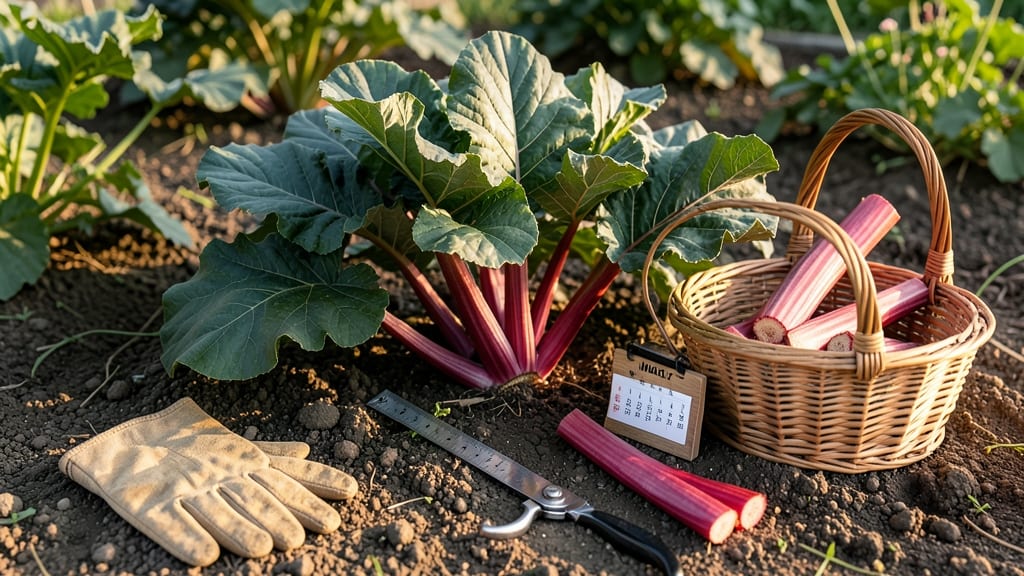
Harvesting rhubarb at the right time and in the right way means the difference between tender, sweet stalks and tough, bitter ones.
Picture this: you’ve waited all winter for your 🍃 rhubarb to wake up, only to pull a stalk that’s still woody or underripe. Or worse, you harvest too late, and the plant sends energy into flower stalks instead of those juicy stems you crave.
The good news? With a few simple cues—stalk size, color, and firmness—you can time your harvests like a pro.
In Zone 6, where most gardeners grow rhubarb, the ideal window opens in late April or early May, just as the soil warms and the stalks reach 10–12 inches tall. But timing isn’t the only trick—how you cut matters just as much.
Snip too close to the crown, and you risk damaging next year’s harvest. Pull too aggressively, and you’ll stress the plant when it’s already working hard to fuel new growth.
By the end of this guide, you’ll know exactly when to harvest for peak flavor, how to cut without harming the plant, and how to keep your rhubarb productive for years. No more guesswork—just crisp, vibrant stalks ready for pies, compotes, or whatever your heart desires.
The exact color and size guide to harvesting rhubarb for optimal flavor
Harvesting rhubarb at the right moment transforms your garden into a flavor factory. The perfect stalk combines vibrant color, ideal thickness, and firm texture. But how do you spot it? Let’s break down the visual cues that separate peak harvest from disappointment.
First, focus on stem color—this is your most reliable indicator. Pink or red varieties like 'Strawberry' or 'Victoria' should have deep, even hues with no green streaks. Green varieties like 'Green Glow' or 'Hollywood' need uniform green without yellowing.
Pale or uneven colors mean the stalk is underripe or stressed.
Next, check stalk thickness. Aim for stalks with a diameter of 1-2 inches at their base. Thinner stalks (less than ½ inch) are too young, while overly thick stalks (>2.5 inches) often become fibrous.
Use your thumb and forefinger to gauge—if it feels slightly thicker than a pencil, it’s ready.
Don’t overlook firmness. Press a stalk gently—it should spring back like a fresh asparagus spear. Soft or rubbery stalks are past their prime, while overly hard stalks may still need time. The crispness test is key: snap a small piece—if it breaks cleanly with a slight crunch, it’s perfect.
Pro tip: Harvest in the morning when stalks are cool and crisp. Avoid cutting after rain—waterlogged stems lose flavor and texture. Always harvest from the outer stalks first, leaving the center for future growth. This protects your plant’s crown health and ensures bigger yields next season.
Seasoned gardeners swear by the "leaf rule": harvest only when the leaves are fully unfurled. Tightly curled leaves signal the stalk isn’t ready. And never cut the leaves—they’re toxic and essential for photosynthesis. Focus solely on the stems, which are your edible goldmine.
For first-year plants, skip harvesting entirely. Let them establish roots and store energy. In year two, you’ll see 10-12 inch stalks by late spring—your reward for patience. After year three, your rhubarb plant will deliver heavier harvests if you follow these cues religiously.
One common mistake? Harvesting too aggressively in early spring. Cold snaps can stress the plant, leading to weak regrowth. Wait until after the last frost (typically mid-April in Zone 6) and when soil temps hit 50°F. Use a thermometer if unsure—rhubarb hates cold soil.
Finally, store harvested rhubarb in the fridge for up to 2 weeks, wrapped in a damp paper towel to retain crispness. But why wait? The best rhubarb is fresh from the garden, sweetened naturally by the sun. Now grab those shears—and happy harvesting! 🌱
Best harvesting methods: when to cut, how to avoid damaging the plant, and seasonal timing
Harvesting rhubarb at the right time transforms your garden into a flavor factory. The ideal window opens in late spring, typically 2-3 weeks after the last frost when stalks reach 10-12 inches tall. This timing ensures tender, sweet stalks while preserving the plant’s energy for future growth.
I’ve learned the hard way—harvesting too early yields woody, tart stalks, while waiting too long risks flowering, which weakens the plant.
Your harvesting tool matters just as much as timing. For thin stalks, I use my fingers to gently twist them free, but for thicker stalks, sharp pruning shears work best. Always cut 1 inch above the crown to prevent rot and encourage new growth.
Avoid tearing stalks—this damages the plant’s vascular system and invites disease. I’ve seen gardeners make this mistake and end up with stunted regrowth.
Seasonal timing is critical for perennial rhubarb. In Zone 6 climates, the main harvest runs from April to June, with a possible fall harvest in September if stalks regrow.
Never harvest after mid-June—this triggers flowering, which drains the plant’s resources. I mark my calendar to stop cutting by July 1st to protect my rhubarb’s long-term health.
⚠️ Critical Harvesting Mistakes to Avoid
Never harvest leaves or flower stalks—they contain toxic oxalic acid. Cutting too close to the crown (less than 1 inch) risks rot. In Zone 6, stop harvesting by July 1st to prevent flowering. Over-harvesting in the first year can kill the plant—wait until year 2 for full harvests.
To protect your rhubarb’s crown for future harvests, focus on selective cutting. Always leave at least 3-4 stalks per plant to maintain energy reserves. I use a fan-shaped approach, cutting stalks from the outer edges first and working inward.
This method prevents overcrowding and ensures even regrowth. After harvesting, I water deeply to replenish moisture lost during cutting.
If you’re growing forced rhubarb (like 'Victoria' or 'Champagne'), timing shifts slightly. These varieties benefit from winter protection and can be harvested as early as March in mild climates.
However, remove all protection by late April to resume normal growth cycles. I’ve found that forced rhubarb rewards patience—its early harvests make it worth the extra effort.
Watch for signs of stress like yellowing leaves or weak stalks—these indicate over-harvesting. In my garden, I’ve seen rhubarb plants recover from light over-harvesting but never from severe neglect. If stalks appear pale or rubbery, it’s time to pause harvesting and focus on care.
A balanced approach ensures your rhubarb thrives for decades, producing bountiful harvests year after year.