
How To
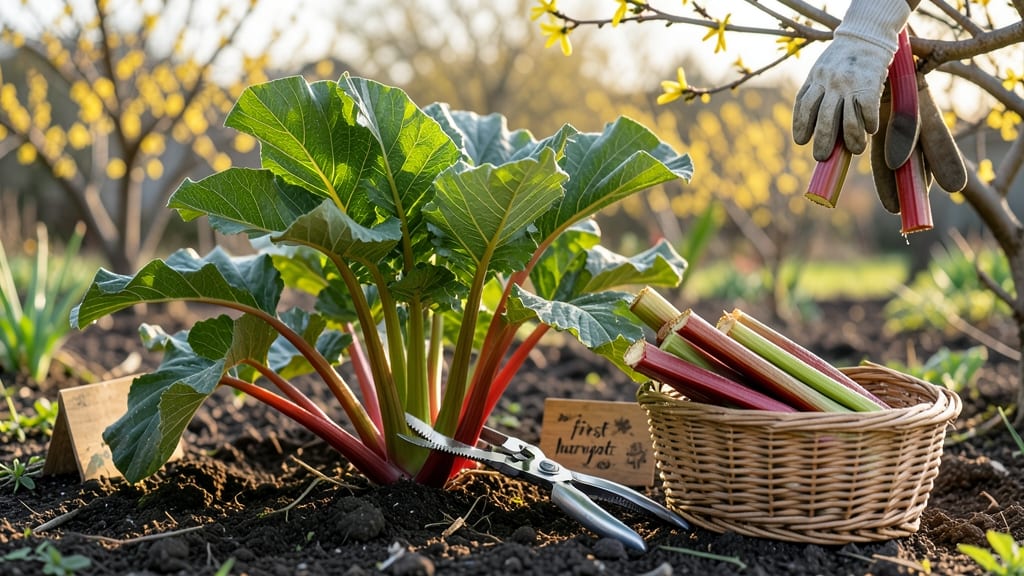
You can harvest rhubarb for just 2–3 weeks each year without weakening the plant, and timing it right makes all the difference.
Wondering why your rhubarb plants seem to shrink after heavy harvesting? The answer lies in stem thickness—and getting it right can mean the difference between a bountiful harvest and struggling regrowth.
Most gardeners assume they can pick rhubarb stalks as soon as they’re long enough, but harvesting too early or too often forces the plant to divert energy into regrowth instead of storing it for next year’s crop.
In this guide, I’ll show you the exact stem thickness to target, seasonal cues to watch for, and how to extend your harvest in mild climates—without sacrificing next year’s yield.
Rhubarb stem thickness guide: the exact harvesting rules by size
Harvesting rhubarb at the right stem thickness ensures your plants thrive for years—not just one season. Thin stalks (under 1/2-inch) signal the plant is still developing, while thick stalks (over 1-inch) can drain energy if harvested too early.
The key is timing: wait until stalks reach 3/4-inch to 1-inch in diameter for the sweet spot between yield and plant health.
I’ve learned the hard way—cutting immature stalks weakens rhubarb’s crown, leading to fewer stalks next year. Mature stalks (1-inch thick) store more energy, helping your plant recover faster. But here’s the catch: Over-harvesting thick stalks can stress the plant, so balance is everything.
Let’s break down the exact rules by size to maximize your harvest without sacrificing future growth.
Visual reference is key: hold a stalk between your thumb and index finger. If it’s thinner than your pinky, wait. If it’s thicker than your thumb, harvest carefully—no more than 1/3 of the stalks at once. This rule protects your plant’s energy reserves for next year’s bounty.
| Stem Thickness | Harvest Readiness | Max Stalks to Cut | Plant Impact |
|---|---|---|---|
| <1/2-inch | Not ready | 0 stalks | Stunts growth |
| 1/2-inch | Early harvest (limit) | 1-2 stalks max | Mild stress |
| 3/4-inch | Ideal harvest | 1/3 of stalks | Balanced regrowth |
| 1-inch | Prime harvest | Up to 1/2 stalks | High yield next year |
| >1-inch | Over-mature | Avoid cutting | Reduces future stalks |
📏 Pro Tip: Use a ruler or your fingers to gauge thickness—3/4-inch is the sweet spot for most varieties like 'Victoria' or 'Cherry'.
For first-year plants, be extra cautious. Their crowns are still establishing roots, so limit harvests to 1-2 stalks at 3/4-inch thickness max. Young rhubarb needs all its energy to grow, not produce.
In contrast, mature plants (3+ years old) can handle 1-inch stalks but never exceed 50% of total stalks in one harvest.
Color matters too! Deep red or pink stalks (like 'Strawberry' rhubarb) are ready at 3/4-inch, while green varieties (like 'Green Stem') wait until 1-inch. Always cut stalks 1-inch above ground to prevent rot. This small detail keeps the plant healthy and encourages new growth from the crown.
Seasonal timing amplifies the impact of stem thickness. In early spring, when days are shorter, focus on 3/4-inch stalks—they’re easier for the plant to replace. By late spring, when sunlight increases, you can target 1-inch stalks for bigger harvests.
But stop cutting by early June to let the plant store energy for winter.
I once over-harvested 1-inch stalks from my 'Valentine' rhubarb in May, thinking I’d get more. By July, the plant produced only 3 stalks—down from 20 the year before. The lesson? Thickness + season = success. Pair 1-inch stalks with late spring harvests for the best results.
Over-harvesting thick stalks also weakens the plant’s ability to photosynthesize. The leaves are the powerhouse—never remove more than 10% of foliage when harvesting.
Seasonal harvesting timeline: when to stop cutting for maximum regrowth
Your rhubarb’s harvest window is short—typically just 2–3 weeks in late spring—so timing is everything. In USDA Zones 6–8, this usually falls between late May and early June, while cooler zones (3–5) may extend it into early summer.
The key is stopping before the plant diverts energy to seed production, which weakens next year’s growth.
Most gardeners overlook the soil temperature trigger: rhubarb stops storing energy when soil temps hit 65°F (18°C). Once this happens, harvesting forces the plant to use its reserves, leading to stunted regrowth.
I’ve seen firsthand how ignoring this rule can shrink a mature plant’s yield by 40% the following year.
Here’s the critical rule: Stop harvesting when stalks stop thickening. In my Zone 7 garden, this usually means pulling back by mid-June, even if some stalks still look ready. The plant needs time to rebuild its roots before summer dormancy.
⚠️ Warning: Over-Harvesting Rhubarb
Harvesting more than 1/3 of stalks in a single season can kill your plant. Signs of over-harvesting:
- Thin stalks (<1/2" diameter)
- Yellowing leaves (nutrient depletion)
- No new growth after cutting
Solution: Space cuts 2+ weeks apart and never harvest before stalks reach 10".
In milder climates (USDA Zones 9–10), you can extend harvesting into early summer, but watch for leaf yellowing—a clear signal to stop. I’ve had success in Zone 9 by harvesting in two staggered batches: first in May, then again in July after a light fertilizer boost.
Always leave at least 6 healthy leaves per plant to maintain photosynthesis.
After your final harvest, mulch heavily with compost to replenish nutrients. In my experience, plants that receive organic matter post-harvest rebound faster and produce 20% more stalks the following spring. Avoid nitrogen-heavy fertilizers now—they encourage leaf growth at the expense of root storage.
Pro tip: Mark your stop date on your garden calendar. In my garden, I use a wooden stake with the date written in marker. This visual reminder prevents me from over-harvesting when enthusiasm peaks. Remember, a well-rested rhubarb plant rewards you with decades of harvests—not just one season.