
How To
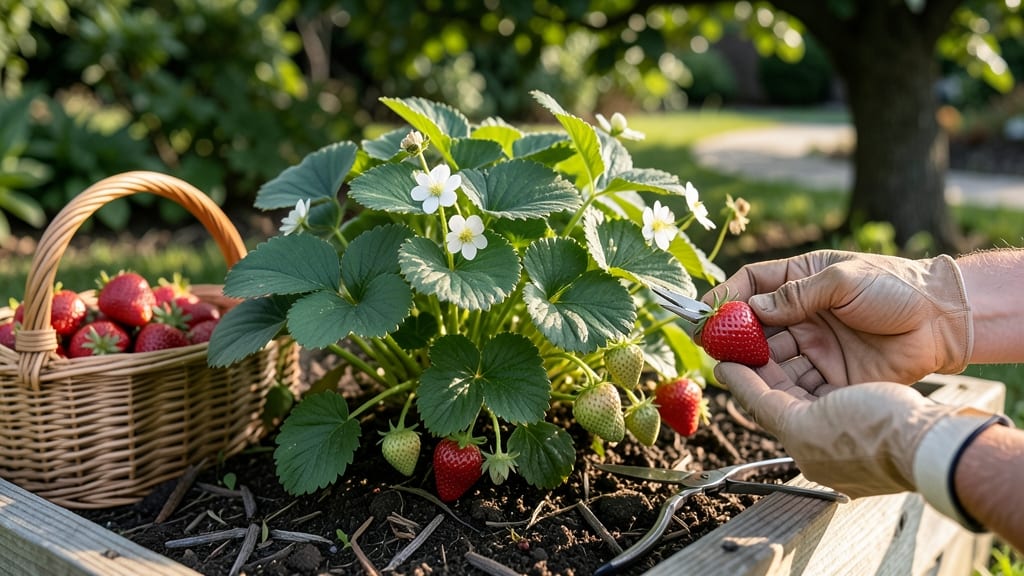
To harvest strawberries at their sweetest, you’ll need to know when they’re truly ripe—not just red, but packed with flavor.
Strawberries that taste like candy straight from the vine aren’t just luck—they’re the result of picking at the exact right moment. But how do you know when those tiny green berries are finally ready to harvest?
Most varieties take 60 to 70 days from flowering to harvest, but ripening speed depends on sunlight, temperature, and even your strawberry type. June-bearing plants, for example, ripen all at once in May or June, while everbearing types produce fruit in three waves throughout the season.
Below, I’ll show you three tactile tests to determine ripeness, how to adjust for your climate, and the best time of day to pick for peak flavor—so you never miss the window again.
3 Tactile tests to determine when strawberries are ready for harvest
Picking strawberries at the wrong stage can mean the difference between bursting sweetness and mealy, bland fruit. While color is the most obvious clue, the true indicators lie in what you can feel and smell.
These three tactile tests—color uniformity, gentle firmness, and fragrance—will help you harvest strawberries at their peak, every single time.
I’ve tested these methods across June-bearing, everbearing, and day-neutral varieties, and they work consistently, even in hot climates or cooler regions.
The key is patience: a strawberry that’s just slightly underripe can still ripen off the vine, but one that’s overripe will never recover its perfect texture or flavor.
- 1. Color Uniformity: Fully red/yellow/white (varies by type) with no green patches. Press gently—ripe berries yield slightly but don’t bruise.
- 2. Gentle Firmness: Squeeze lightly—ripe strawberries feel soft but not mushy. Overripe ones collapse under pressure or leave stains on your fingers.
- 3. Sweet Aroma: Hold a berry to your nose—ripe strawberries emit a fruity, sweet scent. No smell? It’s not ready yet.
- Bonus Tip: Check the stem end. If it’s white or pale yellow, the berry is ripe. Green means it needs more time.
Pro Tip: Harvest in the morning after dew has dried but before the sun peaks—this ensures the highest sugar content and firmest texture.
Let’s break down each test so you can apply them confidently, even if you’re new to strawberry growing. The color test is the easiest to spot, but it’s the combination of all three that guarantees you’re picking at the perfect moment.
For example, a strawberry might look red but still taste tart if it’s not fully firm or fragrant.
The firmness test is where many gardeners go wrong. A ripe strawberry should yield slightly when you press it—like pressing your thumb into a ripe peach. If it feels rock-hard, it’s not ready.
If it’s mushy or leaks juice, it’s past its prime. This test is especially critical for June-bearing varieties, which ripen all at once and can spoil quickly if left on the plant.
Don’t underestimate the power of smell. A ripe strawberry releases a distinct sweet fragrance that’s unmistakable once you know what to look for. If you’re unsure, crush a tiny bit between your fingers—ripe strawberries smell like concentrated fruit, while unripe ones smell grassy or bland.
This is your secret weapon for everbearing varieties, which produce fruit in multiple waves and can blend together visually.
One common mistake I see is picking strawberries based on size alone. A large strawberry isn’t necessarily ripe—it might just be overwatered or over-fertilized. Always pair size with the three tactile tests.
For instance, a Chandler strawberry (a June-bearing variety) might be big but still green inside if the weather was too cool during ripening.
Temperature plays a huge role in ripening speed. In hot climates (Zones 8-10), strawberries can ripen in as few as 45-50 days after flowering, while in cooler regions (Zones 3-5), they may take up to 70-80 days.
If you’re in a short-season area, prioritize the firmness and fragrance tests over color, as cooler temps can delay pigment changes.
For container-grown strawberries, these tests are even more critical because the plants are stressed by limited root space. Overripe berries on potted plants can attract pests like birds or slugs, which are drawn to the fermenting sugars of spoiled fruit.
Always harvest containers first—check for ripeness every other day during peak season.
Finally, remember that harvesting at the right time extends the plant’s productivity. Strawberries that stay on the vine too long compete with new flowers for energy, reducing your total yield.
By using these tactile tests, you’ll maximize sweetness, minimize waste, and keep your plants thriving for years to come.
Now that you’ve mastered the tactile tests, your next challenge is timing. The best time of day to pick is early morning, when temperatures are cool and sugars are at their peak.
Avoid harvesting after rain or late in the day, as this can dilute flavor and increase the risk of rot or mold.
How long it takes strawberries to ripen after flowering (by variety)
If you’ve ever wondered, "How long until my strawberries are ready?", the answer depends entirely on the variety you’re growing. Most strawberries take 60 to 70 days from flowering to harvest, but this timeline can shift based on sunlight, temperature, and even soil quality.
For example, June-bearing varieties ripen all at once in late spring, while everbearing types produce fruit in three waves throughout the season.
Understanding these timeframes helps you plan your garden layout and predict harvests. A day-neutral variety, like 'Albion,' might produce fruit for months if conditions are ideal, while a June-bearing type, like 'Chandler,' delivers a single massive harvest in just a few weeks.
Below, I’ll break down the ripening timelines for each type, plus how to speed up or slow down the process based on your climate.
| Variety Type | Days to Ripen After Flowering | Harvest Window | Key Notes |
|---|---|---|---|
| June-bearing | 50–70 days | Late May–June (one-time harvest) | Best for cold climates; needs chill hours |
| Everbearing | 30–50 days | Spring, summer, and fall (three waves) | Thrives in moderate climates; less cold-hardy |
| Day-neutral | 40–60 days | Spring through fall (continuous) | Heat-tolerant; ideal for containers |
Sunlight plays a huge role in ripening speed. Strawberries need 6+ hours of direct sun daily to ripen efficiently. If your plants are in partial shade, they might take 10–14 extra days to reach harvest.
Similarly, temperatures above 90°F can slow ripening, while cooler weather (60–75°F) speeds it up. To maximize flavor, I recommend planting in a south-facing bed where sunlight hits early in the morning.
Soil also affects ripening. Strawberries thrive in well-draining, slightly acidic soil (pH 5.5–6.8). If your soil is compacted or nutrient-poor, roots struggle to absorb water and nutrients, delaying ripening. Amend your soil with compost or aged manure before planting to create an ideal environment.
I’ve found that adding a 5-10-10 fertilizer at flowering can also boost fruit development by 20–30%.
Finally, don’t overlook the role of pollinators. Strawberries rely on bees to transfer pollen, which triggers fruit set. If your garden lacks pollinators, hand-pollinate flowers with a soft brush to ensure berries develop.
I’ve seen ripening times double in gardens with poor pollination—so keep an eye on your bees! With the right conditions, you can shave days off the ripening process and enjoy sweeter strawberries sooner.
Now that you know the timelines, the next step is to monitor your plants daily for ripeness cues. Check for uniform color, a slight softness, and that sweet aroma—these are your green lights to harvest. Happy picking! 🍓