
Picking
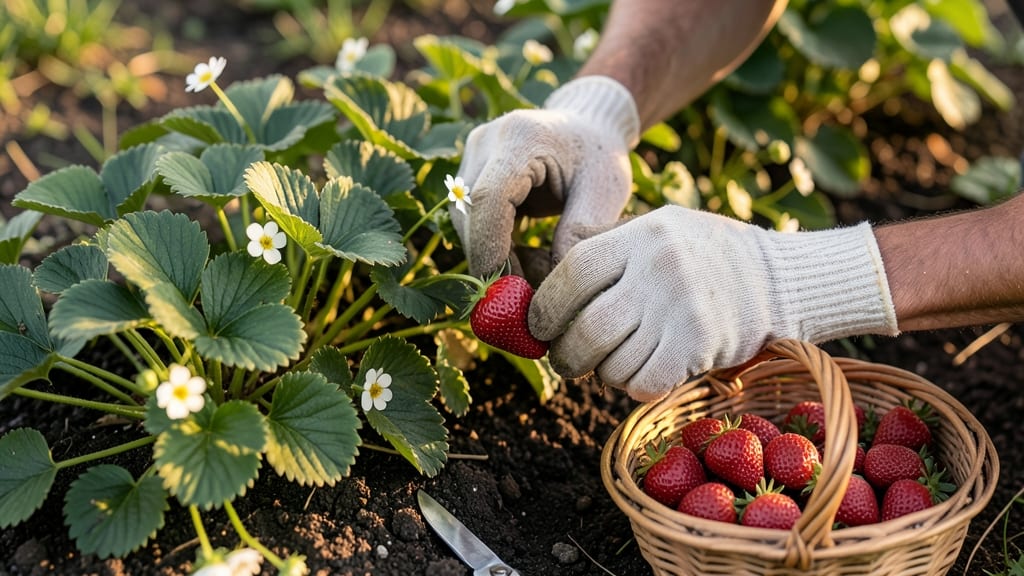
The strawberry harvest season arrives when those tiny green bumps transform into vibrant, juicy 🍓 delights—yet many gardeners miss the peak by days, or even weeks.
There’s nothing like biting into a strawberry so sweet and ripe it practically melts in your mouth—but timing your harvest wrong can turn that dream into a mealy, tart disappointment.
Knowing exactly when and how to pick strawberries determines whether you’ll enjoy a bountiful, flavor-packed season or end up with wasted fruit.
In USDA Zone 6a, most varieties ripen between June and August, but early or late-season types can stretch that window even further. The key lies in watching for uniform color, a slight softness when gently squeezed, and that telltale easy release from the plant.
Below, I’ll break down the best ways to spot ripe strawberries, adjust your harvest schedule by region, and even extend your season with simple tricks—so you can savor every last berry at its sweetest.


How to identify the perfect strawberry harvest season by color, size & smell
Picking strawberries at the peak of ripeness transforms your harvest from good to extraordinary. The difference between a juicy, sweet berry and one that’s tart or mushy often comes down to timing.
I’ve learned the hard way—overripe strawberries turn to mush in minutes, while underripe ones taste bland and firm. Let’s break down the three key indicators to nail your harvest every time.
First, focus on color consistency. Strawberries should be a uniform deep red (or the color of your variety, like yellow or white). Even a tiny speck of green at the calyx (the green top) means it’s not ready.
I always check the entire berry, not just the side facing the sun, which can trick you into thinking it’s ripe when it’s not.
| Ripeness Indicator | Ready Strawberry | Not Ready Strawberry |
|---|---|---|
| Color | Uniform deep red/yellow/white (no green) | Green or patchy color |
| Firmness | Slightly soft and yielding to touch | Hard or rock-solid |
| Smell | Sweet, fruity aroma | No scent or moldy smell |
| Attachment | Detaches easily with gentle tug | Tightly stuck to plant |
| Size | Full-sized for variety type | Smaller than expected |
Next, test firmness with a gentle squeeze. A ripe strawberry should feel slightly soft but not mushy. Think of it like a ripe peach—yielding, not hard. If it’s rock-solid, it’s underripe.
If it’s squishy, it’s overripe and will spoil quickly. I always pick in the early morning when temperatures are cooler to preserve freshness.
Don’t underestimate the power of scent. A ripe strawberry emits a sweet, fragrant aroma. Hold it close to your nose—if you can’t smell anything, it’s not ready. Some varieties, like Albion (white strawberries), have a more subtle scent, but you’ll still detect a fresh, clean fragrance.
Overripe berries, on the other hand, may smell fermented or sour, a sure sign to leave them on the vine.
Size matters, but it’s not the only factor. Some strawberries, like Chandler or Seascape, stay small but pack incredible flavor. Others, like Ozark Beauty, grow larger but may not ripen uniformly.
I always compare berries on the same plant—if one is significantly larger than its neighbors, it’s likely the first to ripen.
One common mistake I see is picking strawberries based on size alone. A giant strawberry that’s still green inside will be tart and disappointing. Always check the color and scent first.
Another tip: harvest every 2-3 days during peak season to encourage more fruit production. Overlooking ripe berries can stress the plant and reduce future yields.
If you’re growing everbearing or day-neutral varieties, they’ll produce fruit in multiple flushes throughout the season. Pay attention to new growth—berries that form on new crowns (the central part of the plant) tend to ripen later.
I mark my calendar with three harvest windows: early summer, late summer, and sometimes a fall flush in warmer climates.
Finally, avoid physical damage when harvesting. Use clean scissors or pruners to snip the stem about 1/4 inch above the berry. This prevents bruising and disease. I also never wash strawberries until ready to eat—moisture speeds up spoilage.
Store them in a paper towel-lined container in the fridge for up to 5 days to maintain freshness.
Mastering these cues will turn your strawberry patch into a flavor factory. The first time I nailed the harvest timing, I couldn’t believe how sweet and juicy every berry was. Now, I look forward to that perfectly ripe moment all season long. 🌱
Strawberry harvest season by region: when to pick in Zones 3-10 (with planting timelines)
Timing your strawberry harvest depends entirely on your USDA hardiness zone—and choosing the right variety can stretch your season from early spring to late fall. In colder zones like 3-5, frost-sensitive plants need careful planning, while warmer zones 8-10 can enjoy year-round production with the right techniques.
Let’s break down the ideal harvest windows and how to adjust your planting schedule for maximum yield.
For cool climates (Zones 3-6), focus on June-bearing varieties like Jewel or Honeoye, which produce one massive harvest in late June to July. Meanwhile, everbearing varieties such as Seascape or Ozark Beauty deliver two smaller harvests: one in early summer and another in fall.
Warmer zones 7-10 can grow day-neutral varieties like Albion or Tristar, which fruit continuously from spring to frost.
📅 Planting timelines shift dramatically by zone. In Zones 3-4, plant bare-root crowns in late spring (May) to avoid frost damage, while Zones 5-7 allow for spring or fall planting. Zones 8-10 can plant year-round, with fall plantings yielding winter harvests. The key? Adjust for last frost dates—plant 4-6 weeks before in cooler zones or year-round in warm climates.
In Zones 3-6, mulching is non-negotiable—use 6 inches of straw or leaves to insulate roots from freezing temperatures. For Zones 7-10, shade cloth during peak summer heat prevents sunscald and extends harvests.
Pro tip: Ever-bearing varieties in Zones 5-6 benefit from removing old leaves after the first harvest to redirect energy to fall fruit.
To maximize your strawberry harvest season, consider succession planting in Zones 8-10. Plant new crowns every 2-3 months to ensure a continuous supply from spring to frost. Pair June-bearing and everbearing varieties in Zones 5-7 for a staggered harvest that spans June to September.
With the right variety selection and planting strategy, you can enjoy homegrown strawberries for nearly half the year!
🌱 Remember: Harvest timing isn’t just about <