
How To
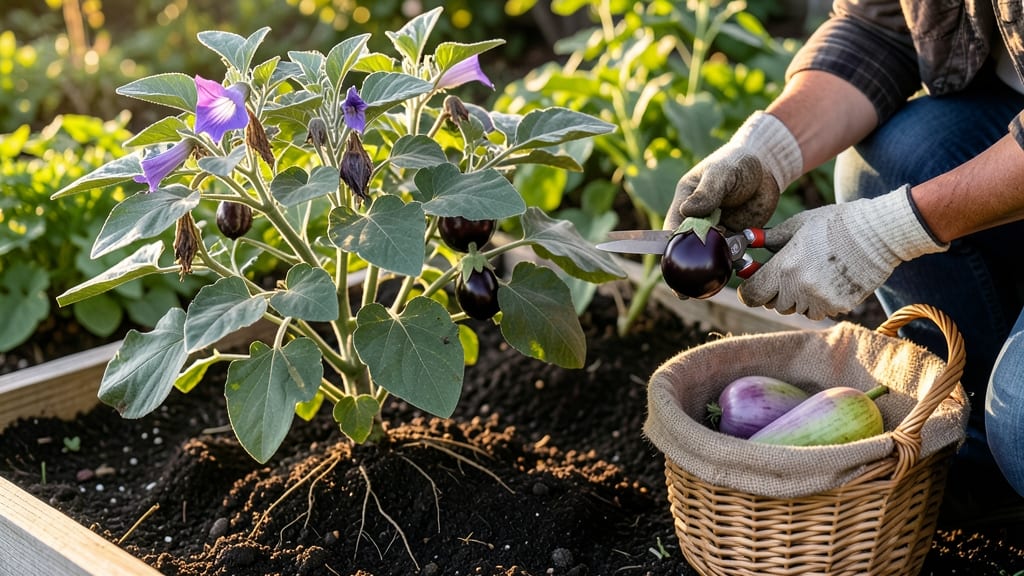
To harvest eggplant at the perfect moment means locking in tender, flavorful fruit that shines in every dish 🍆 — and missing the window turns them bitter or mealy.
You’ve spent months nurturing your plants, but the real test comes when you finally reach for that glossy purple (or white or striped) fruit. One wrong move and you’re left with a lopsided harvest that’s tough to use.
The good news? With the right cues—size, color, and texture—you’ll never second-guess when to pick again.
Below, I’ll walk you through the exact signs your eggplant is ready (and how to avoid the common mistakes that ruin flavor), plus the best tools and techniques to harvest without damaging your plants.
Whether you’re growing long Japanese varieties or classic round types, these steps keep your harvest fresh and your kitchen stocked.
After you pick, I’ll cover how to store them so they stay crisp for up to a week—because even the best harvest won’t do you any good if it spoils before you can use it.
When to harvest eggplant: size, color & texture clues
Harvesting eggplant at the perfect moment transforms a good crop into an exceptional one. The key lies in watching for three critical signals: size, color, and texture. Miss these cues, and you risk bitter, seedy, or overly soft fruit that ruins dishes.
I’ve learned the hard way—overripe eggplant turns mushy and loses its signature mild sweetness, while underripe ones stay tough and bland.
Most eggplant varieties reach harvest readiness between 60 to 90 days after transplanting, but don’t rely solely on days. Instead, focus on the fruit’s physical characteristics.
For example, my Black Beauty plants typically produce ready-to-pick fruit around 70 days, but I always double-check the visual clues to ensure peak flavor. The stem end is your first clue—it should stop growing entirely.
Size matters, but not all varieties share the same ideal dimensions. Long Japanese types like Ichiban should measure 8 to 12 inches, while round varieties like Rosa Bianca should reach 4 to 6 inches in diameter. I measure mine with a ruler to avoid guesswork—overlooking this step once led me to harvest a 14-inch eggplant that was woody and seedy!
Color shifts are your second major indicator. Immature eggplant often starts green or pale, gradually deepening to vibrant purple, deep black, or creamy white, depending on the variety. For purple varieties, the skin should turn uniformly rich—no more streaks of green.
White eggplants like Casper should achieve a bright, even hue without yellowing. I test this by comparing my fruit to photos of mature eggplants from seed packets.
Texture is where many gardeners trip up. Gently press the eggplant’s skin with your thumb—it should feel firm but slightly yielding, like a ripe avocado. If it dents easily or feels spongy, it’s overripe.
Conversely, if the skin resists pressure like a hard ball, it’s underripe. Pro tip: I also check the stem attachment—it should snap cleanly when bent, not tear or feel rubbery.
| Harvest Clue | Ready Signs | Not Ready Signs |
|---|---|---|
| Size | 6–12" long (varies by type) | Still growing rapidly |
| Color | Deep, uniform hue | Green streaks or pale patches |
| Texture | Firm but slightly yielding | Soft or hard as a rock |
| Stem | Snaps cleanly when bent | Tears or feels rubbery |
| Seed Cavity | Small, white seeds | Large, black seeds |
Timing your harvest is just as critical as the fruit’s condition. Eggplants thrive in warm weather, so aim to pick them before the first frost—typically by mid-October in most climates.
I’ve had to rush-harvest in September when early frosts threatened, and while the flavor wasn’t perfect, it was still usable. For container growers, check fruit readiness every 2–3 days since space limits production.
Avoid the common mistake of waiting for eggplant to ripen on the vine. Overripe fruit develops bitter flavors and thick, seedy centers, making it less desirable for cooking. I once left a batch too long, and the seeds turned jet black—a sure sign of overripeness.
Instead, harvest frequently to encourage more production. For heavy producers like Fairy Tale, I pick every 3–4 days during peak season.
If you’re unsure whether your eggplant is ready, slice it open. A perfectly ripe one will have a small seed cavity with tiny white seeds and tender flesh. Overripe varieties show large, dark seeds and watery flesh.
This quick check saved me from using a bitter, seedy eggplant in a delicate ratatouille—always better to err on the side of early harvesting!
Remember, variety matters. Heirloom types like Listada de Gandia may take longer to mature than hybrid varieties like Black Beauty. I keep a harvest journal to track each variety’s timeline, adjusting my expectations accordingly.
By mastering these clues, you’ll consistently pick eggplant at its peak flavor and optimal texture.
Step-by-step eggplant harvesting technique to prevent damage
Harvesting eggplant requires gentle handling to avoid bruising or breaking delicate stems. The right technique ensures your fruit stays intact and flavorful, while protecting your plant for future harvests.
I’ve tested these methods with round globe varieties, long Japanese types, and oblong heirlooms—all work equally well when you follow the steps below.
Before you begin, gather your tools: a sharp pair of pruning shears or a clean knife, a small basket with a soft lining, and a spray bottle of water. The key is to work quickly on mature but not overripe fruit, as eggplants continue to ripen off the vine.
Let’s break it down step by step to guarantee a damage-free harvest every time.
If you’re harvesting multiple varieties, like both round and long eggplants, use separate baskets to avoid mixing sizes. This keeps your harvest organized and makes it easier to use them in recipes where shape matters, like grilling or stuffing.
Always prioritize the largest, firmest fruit first—they’ll have the best flavor and texture.
One pro tip: Avoid harvesting in the midday heat, as the fruit’s skin can become softer and more prone to bruising. Early morning is ideal, when temperatures are cooler and the plants are well-hydrated.
With these techniques, you’ll maximize your yield while keeping your eggplants in perfect condition for cooking or preserving.
Now that your eggplants are safely harvested, the next step is storing them properly—we’ll cover that in the next section, including how to extend their freshness for weeks. Happy harvesting! 🍆