
How To
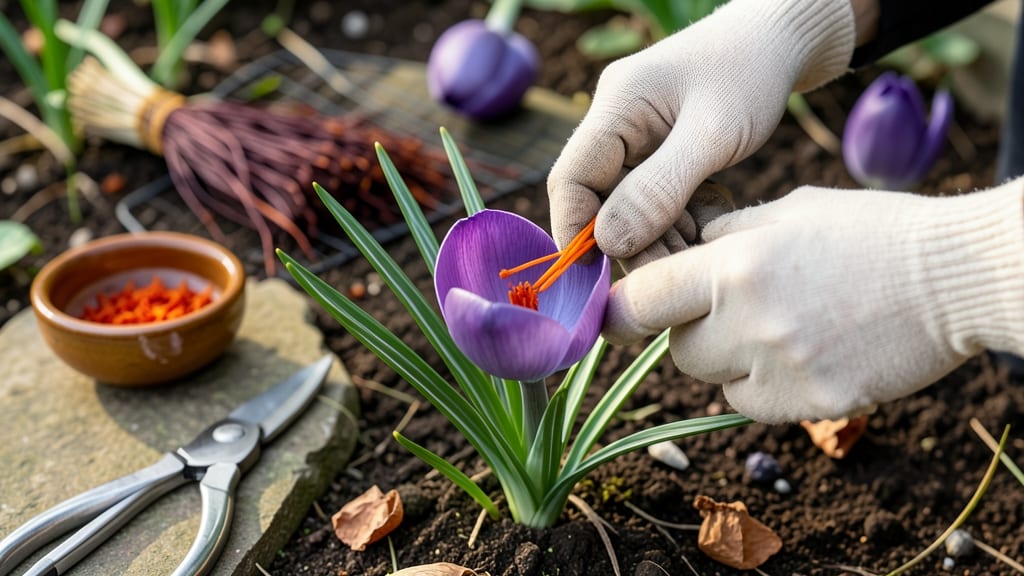
Harvesting saffron from 🌼 Saffron Crocus at the right moment transforms those tiny purple blooms into the world’s most prized spice—but one wrong move ruins your yield.
Picture this: you’ve waited months for your Saffron Crocus to bloom, only to pick the flowers too early or too late and end up with pale, brittle stigmas instead of vibrant gold threads.
The difference between a high-quality harvest and wasted effort comes down to timing, technique, and handling those delicate stigmas with care.
In this guide, I’ll walk you through the exact 3-4 day window when stigmas are ripe for picking, the tools you’ll need (hint: gloves are a game-changer), and how to dry and store your harvest to preserve its rich aroma and color.
Skip the guesswork and turn your garden into a saffron goldmine—without the common mistakes that leave you with less than you expected.
You’ll learn how to spot the perfect bloom, pluck stigmas efficiently, and even troubleshoot if your saffron turns out dull or weak. Ready to unlock the secret behind those expensive threads? Let’s get started.
When to harvest saffron crocus for peak stigma quality and yield
Timing is everything when harvesting saffron crocus—pick too early, and the stigmas won’t be fully developed; wait too long, and they’ll shrivel or turn bitter. The ideal harvest window is 3-4 days after full bloom, when the stigmas are bright red, moist, and easily detachable.
This narrow window ensures you collect high-quality saffron with maximum flavor and color intensity.
I’ve learned from years of gardening that morning harvests are best—before 10 AM—when morning dew keeps the stigmas hydrated and pliable. Avoid harvesting after noon, as the stigmas can dry out too quickly, making them brittle and harder to handle.
The temperature also plays a role; aim for days between 50°F and 70°F for optimal stigma quality.
Look for these key visual cues to confirm readiness: fully open petals (deep purple, not wilting), bright red stigmas (about 1 inch long), and a slightly moist texture.
If the stigmas are pale or still curled, they’re not ready yet. Overripe stigmas will be dry, dark, or crumbling—a clear sign you’ve missed your window.
Here’s a visual guide to stigma maturity—compare these stages to your flowers before harvesting:
| Stage | Stigma Appearance | Harvest Readiness | Day After Bloom |
|---|---|---|---|
| Bud Stage | Pale, tightly curled | Not ready | Day 0-1 |
| Early Bloom | Light red, slightly moist | Not ideal | Day 2 |
| Peak Harvest | Bright red, moist, 1 inch long | Ready! | Day 3-4 |
| Overripe | Dark red, dry, brittle | Too late | Day 5+ |
Pay attention to the daylight hours in your region—shorter fall days mean flowers open later. In USDA Zone 6a, where I garden, crocus blooms typically open around 9 AM and close by noon.
Harvesting in the first 2 hours after opening ensures the stigmas are at their peak. If you’re in a cooler climate, flowers may take longer to open, so adjust your timing accordingly.
One common mistake I see is harvesting based on flower color alone. While vibrant purple petals signal maturity, the stigmas are the true indicator. Always pluck a few stigmas to check their color and texture—if they’re bright red and slightly sticky, you’re golden.
If they’re dull or crumbly, wait another day or two.
Environmental cues like morning dew can also guide you. Dew keeps the stigmas hydrated, making them easier to handle. If you notice heavy dew on the flowers, harvest slightly earlier to avoid overhydration.
Conversely, if the air is dry and windy, harvest a bit later to let the stigmas firm up slightly—this prevents them from breaking during extraction.
Pro tip: Use a small hand lens (10x magnification) to inspect stigma quality if your eyes aren’t up to the task. This helps you spot imperfections or early signs of spoilage that might not be visible to the naked eye.
I keep one in my gardening toolkit specifically for saffron harvests—it’s saved me from wasting entire batches of low-quality stigmas.
Finally, remember that saffron crocus is a perennial, and consistent harvest timing each year improves yield. Keep a harvest journal to track bloom dates, stigma quality, and environmental conditions. Over time, you’ll develop an intuition for the perfect harvest moment in your garden.
With the right timing, you’ll harvest 3-4 stigmas per flower—the industry standard for high-quality saffron. Each stigma is a tiny treasure, and mastering this window transforms your garden into a golden spice factory. 🌼
Step-by-step saffron harvesting technique to maximize stigmas per flower
Harvesting saffron stigmas requires precision—one wrong move and you’ll lose those golden threads or damage the autumn crocus. The key is working with the 3-4 day window after the flower fully opens, when the stigmas are bright red and moist but not overripe.
I’ve harvested saffron for years, and I’ll share my foolproof method to extract the maximum stigmas per bloom without harming your plants.
Start by gathering your tools: soft gloves (to protect your hands and avoid contamination), a small bowl or tray for collecting stigmas, and a sharp pair of scissors or your fingers for plucking.
Avoid metal tools—they can damage the delicate stigmas. Work in the morning after dew dries (around 8–10 AM) when the stigmas are at their freshest and most pliable.
How to Harvest Saffron from Crocus
- 1 Identify the right flower: Look for fully open blooms with bright purple petals and bright red stigmas that are slightly moist but not sticky. Avoid flowers that are wilting or have pale stigmas.
- 2 Gently remove the flower: Hold the flower stem firmly and twist or cut it just above the base. Avoid pulling the entire plant, which can damage the corm and reduce next year’s yield.
- 3 Separate the stigmas: Use your thumb and index finger to gently pinch the base of the three stigmas (they look like tiny red threads). Pull them straight out—don’t tug sideways, or you’ll snap them off. Place them in your clean bowl or tray.
- 4 Inspect for quality: Discard any pale or damaged stigmas—they won’t dry well or retain flavor. Keep only the bright red, moist stigmas that are at least 1–1.5 inches long.
- 5 Repeat daily: Harvest only fully open flowers each morning. Avoid harvesting buds—they won’t yield stigmas. Aim to harvest 3–4 flowers per plant over the 3-4 day window to maximize yield.
One of the biggest mistakes I see is harvesting too early—when stigmas are still white or underdeveloped. This results in pale, low-quality saffron that lacks aroma and color. Another common error is using dirty tools or hands, which can introduce bacteria and spoil your harvest.
Always wear gloves and use clean containers to keep your stigmas pristine.
Pro tip: If you’re harvesting a large batch, consider using a small mesh screen to sift through the stigmas and remove any debris or damaged threads. This ensures you only keep the highest-quality stigmas for drying.
Once you’ve collected your stigmas, the next critical step is drying them properly—too much heat or humidity can ruin their flavor and color.
With this technique, you’ll extract 3 stigmas per flower (the absolute maximum for Crocus sativus) and avoid the common pitfalls that waste your hard work. Happy harvesting—your garden’s saffron goldmine awaits! 🌼