
Vegetables
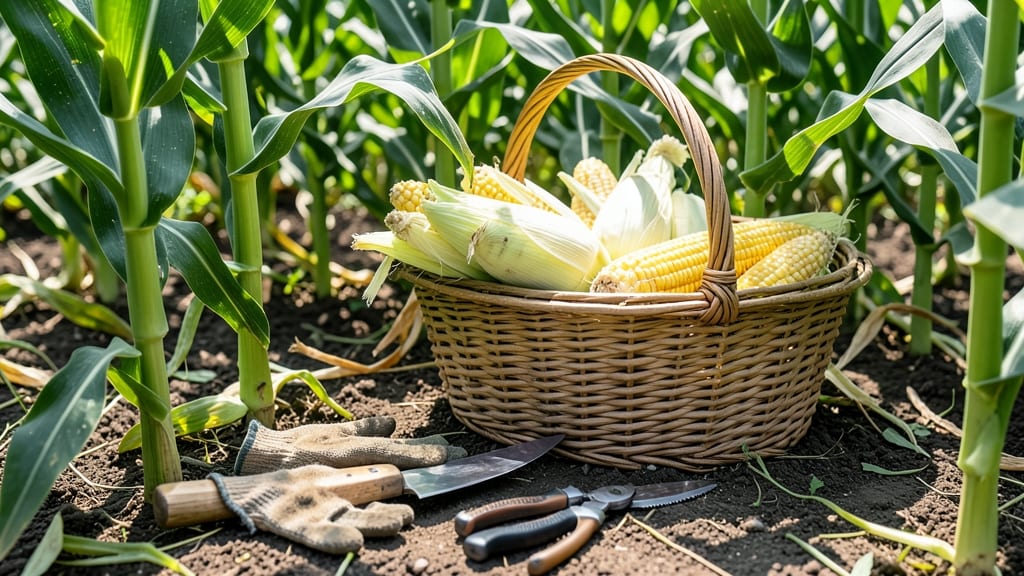
Harvesting sweet corn at the right time means the difference between buttery perfection and tough, starchy disappointment.
Picture this: you’ve spent weeks tending to your 🌽 plants, and now the moment of truth arrives—when to pull those ears for the sweetest flavor. Miss the window, and you’ll regret it. But nail it, and you’ll enjoy ears so tender they practically melt in your mouth.
Most gardeners rely on the classic tricks: dried silks and the kernel milk test. But there’s more to it than just waiting for the silks to brown. Weather, variety, and even the time of day play a role in determining peak ripeness.
In this guide, I’ll walk you through the foolproof methods to tell when your corn is ready, plus how to keep that sweetness locked in once you’ve picked it.
From the first signs of readiness to storing your harvest, you’ll learn exactly when to pull your sweet corn for that restaurant-quality taste—no guesswork required.

How to test sweet corn harvest readiness using the silk-dried & ear-tug methods
Sweet corn reaches its peak sweetness at a very specific window, and missing it means sacrificing flavor for starchy toughness. The two most reliable methods—silk color and ear tug—give you foolproof cues to harvest at the perfect moment.
I’ve used these techniques for years, and they’ve never failed me.
First, let’s tackle the silk-dried method, which is the easiest visual cue. When the silks (those long, thread-like strands) turn from bright green to tan or brown, that’s your first sign.
But don’t rush—wait until they’re completely dry and brittle. This usually happens 24-48 hours before the kernels reach peak sweetness.
The ear-tug method is equally important, as it tests the ear’s firmness and readiness. Gently grasp the ear near the tip and give it a firm but gentle tug. If it stays put, it’s not ready.
If it pulls away with a slight resistance, that’s your signal. This tactile check ensures the kernels are plump and juicy, not hollow or overripe.
| Method | Visual/Tactile Cue | What It Means | Best Time to Harvest |
|---|---|---|---|
| Silk-Dried Method | Silks turn tan/brown and dry | Kernels are nearing peak sweetness | Next 24-48 hours |
| Ear-Tug Method | Ear resists gentle tug | Kernels are plump and firm | Immediately harvest |
| Kernel Piercing Test | Nail sinks into milky-white kernel | Sweetest milk stage | Harvest same day |
| Overripe Warning | Silks dry and crumble | Kernels turn starchy and tough | Avoid harvesting |
For the kernel piercing test, use your fingernail to press a kernel near the tip. If it’s milky white and slightly soft, it’s perfect. If it’s clear or yellow, it’s past its prime. This test is my go-to for confirming readiness after the silk and ear checks.
Timing is critical because sweet corn’s sugars convert to starch within 24 hours of reaching peak ripeness. That’s why I always harvest in the morning when temperatures are cooler. This preserves sweetness longer, especially on hot days when sugars break down faster.
If you’re growing supersweet varieties, like ‘Silver Queen’ or ‘Ambrosia,’ they’re even more sensitive to timing. These types lose sweetness twice as fast as standard varieties, so double-check with both the silk and ear methods. I’ve seen supersweet corn go from perfect to bland in just 12 hours!
One common mistake is harvesting based solely on days to maturity listed on seed packets. While these give a rough estimate, weather and soil conditions can shift ripening by 5-7 days.
For example, cool, rainy summers delay maturity, while hot, dry spells speed it up. Always rely on the visual and tactile cues over calendar dates.
Pro tip: If you’re unsure, harvest a few ears a day apart to test flavor. The first perfectly sweet ear tells you when to pick the rest. This method has saved me from wasted harvests more times than I can count.
Store any extra ears in the fridge for up to 5 days or freeze them for later use.
Mastering these two methods—silk-dried and ear-tug—will turn your sweet corn harvests into flavorful successes every time. Once you get the hang of it, you’ll never second-guess when to pick again. Happy harvesting! 🌽
Sweet corn varieties & their ideal harvest windows for maximum sweetness
Not all sweet corn is created equal—each variety has its own sweetness profile and harvest window. Understanding these differences helps you plan for peak flavor. Sugar-enhanced varieties like 'Silver Queen' stay sweet longer after picking, while supersweet types like 'Ambrosia' are best eaten fresh within 24 hours.
Even standard sweet corn (like 'Country Gentleman') needs precise timing to avoid starchy kernels.
Weather plays a huge role in ripening speed. Cooler temperatures slow down maturation, while hot, sunny days can accelerate it. Planting dates also shift harvest windows—early spring plantings may yield in late July, while late summer plantings could extend into September.
My garden's USDA Zone 6a typically gives me a 3-month harvest window when I stagger plantings every 2 weeks.
| Variety Type | Days to Maturity | Harvest Window | Sweetness Retention | Best For |
|---|---|---|---|---|
| Sugar-Enhanced | 60-70 days | Late July-August | 3-5 days post-harvest | Market sales, storage |
| Supersweet | 70-80 days | August-September | 1 day post-harvest | Fresh eating |
| Standard Sweet | 75-90 days | Mid-July-Mid-Sept | 2-3 days post-harvest | Home gardens |
For supersweet varieties, heat stress can turn kernels watery and bland. I've learned to shade plants during 90°F+ days with lightweight row covers. Sugar-enhanced types handle heat better but need consistent moisture—drought stress makes them starchy and tough.
My Zone 6a garden thrives with drip irrigation set to deliver 1-2 inches of water weekly.
Planting dates directly impact harvest timing. In my experience, April 15th plantings yield in late July, while May 1st plantings peak in early August. Staggering plantings every 2 weeks extends my harvest by 6-8 weeks.
Always check your frost-free days—I aim for 90+ days to maturity before the first frost hits October 15th.
Regional differences matter too. Southern gardeners often harvest 2-3 weeks earlier than northern zones due to longer growing seasons. In Zone 8b, sweet corn might be ready by June 15th, while Zone 4a gardeners might not see harvest until mid-August.
Always adjust planting dates based on your last frost date and average first frost.
Pro tip: Use harvest markers in your garden. I plant early, mid, and late season varieties with different colored stakes to track progress visually. This helps me rotate harvests smoothly and avoid overwhelming my family with too many ears at once. 🌽