
Light Requirements
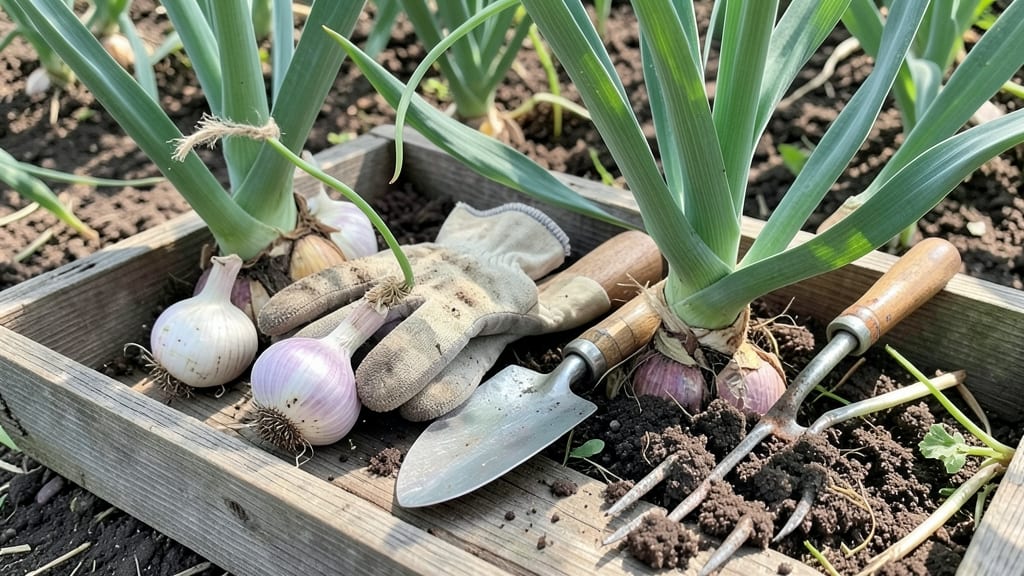
You can harvest garlic when the lower leaves turn brown and dry but the top leaves stay green 🧄—this is the sweet spot for peak flavor and storage life.
Harvesting garlic at the wrong time can mean the difference between a bountiful harvest and a disappointing one—but knowing when to pick scapes and bulbs is often confusing for gardeners.
For most gardeners in Zone 6a, this window falls in late spring, around June to July, when hardneck varieties are fully mature. Softneck types may need a few extra weeks, so keep an eye on those telltale browned lower leaves.
Below, I’ll walk you through the exact signs to look for, how to test for doneness, and what to do if you harvest too early or too late—plus, how to store your garlic so it lasts all year.
How to identify the perfect time to harvest garlic scapes for regrowth
Garlic scapes—those curly, green shoots that sprout from hardneck garlic varieties—are a gardener's secret weapon. Harvesting them at the right time not only gives you flavorful garlic greens but also ensures your bulbs grow larger and stronger.
The key is spotting that perfect moment when the scape curls into a full loop, usually about 6-8 weeks after planting. Missing this window means smaller bulbs and wasted potential.
Why does timing matter? When you remove scapes early, the plant redirects energy from bulb development to leaf growth, resulting in plump, well-formed cloves. If you wait too long, the scape hardens and becomes woody, making it less palatable and reducing bulb quality.
Think of it like giving your garlic a growth boost—timing is everything!
Here’s how to tell when your garlic scapes are ready for harvest:
Step-by-Step Guide to Harvesting Garlic Scapes
- 1 Watch for the curl: Scapes are ready when they form a full loop (about 6–10 inches long). This usually happens in late spring to early summer, depending on your climate.
- 2 Check the stem: The scape should be tender and flexible, not woody or hardened. Run your thumb along it—if it feels firm, it’s past prime.
- 3 Use clean shears: Cut the scape just above the fourth leaf from the top of the bulb. This ensures the plant keeps growing while redirecting energy to bulb development.
- 4 Rinse and store: Wash the scapes gently, then store them in a paper bag in the fridge for up to 2 weeks. They’re perfect for sautéing or blending into pestos!
- 5 Monitor bulb growth: After harvesting scapes, your garlic will focus on bulb development. Keep soil moist but not soggy, and avoid fertilizing—this helps prevent bolt formation (premature flowering).
Pro tip: If you miss the scape harvest window, don’t panic! Some gardeners leave scapes on until they straighten out (a sign the bulb is nearly mature), but this can reduce bulb size. For the best results, prioritize harvesting scapes early and often—your future garlic harvest will thank you!
Harvesting scapes is also a great way to extend your garlic season. Use them in homemade pestos, stir-fries, or as a garnish for dishes like roasted potatoes or grilled meats. Just remember: the earlier you harvest, the bigger your bulbs will grow!
One common mistake is waiting too long because the scape looks "big enough." But size isn’t the only factor—tenderness and curl shape matter most. If you’re unsure, check a few scapes: if most are curled tightly, it’s time to act.
After harvesting, your garlic plants will send out new side shoots. These won’t form bulbs but will keep the plant healthy. Focus on keeping the soil consistently moist and avoiding weeds, which compete for nutrients.
For hardneck varieties (like Rocky Mountain or German Red), scape harvest is critical. Softneck varieties (like Silverskin) don’t produce scapes, so skip this step if you’re growing those. Always plant cloves individually for the best scape production.
Finally, if you’re in a warmer climate, scapes may appear earlier (as early as April). In cooler regions, they might not show up until June. Adjust your timing based on your local frost dates and growing season.
Signs your garlic bulbs are ready for harvest at the hard neck stage
When your hardneck garlic reaches maturity, the plant sends clear visual signals that it's time to harvest. The most reliable indicator is the lower leaves turning brown and crispy, while the top leaves remain green and healthy.
This stage typically occurs in late spring, around June to July for most USDA zones.
Don't wait until all leaves brown—this can lead to shriveled bulbs with poor storage life. Instead, harvest when about half the leaves have dried out. The papery skin forming around the bulbs is another key sign of readiness, indicating the cloves have fully developed inside.
🚨 callout warning 🚨
⚠️ Harvesting Too Early or Too Late
Harvesting too early (when bulbs are still green) results in small, underdeveloped cloves with poor flavor. Harvesting too late (when all leaves brown) leads to shriveled bulbs that won't store well.
Test for doneness by gently lifting a bulb—if it feels firm and well-formed, it's ready. If the skin is still soft or the bulb is loose in the soil, wait 1-2 weeks before harvesting.
To confirm readiness, perform the "snapping test"—bend a garlic stalk near the base. If it snaps cleanly instead of bending, the bulb is mature. This tactile check is especially useful for hardneck varieties, which mature slightly earlier than softneck types.
If you harvest too early, the bulbs may split or rot during storage. Conversely, waiting too long causes the cloves to separate, reducing your yield. Aim for a balance of visual cues—brown lower leaves, green tops, and papery skin—to ensure the best harvest possible.
Once harvested, cure your garlic in a dry, shaded area for 2-3 weeks before storing. This drying process strengthens the skin, preventing spoilage and extending shelf life. Proper curing is just as critical as harvesting at the right time!
For Zone 6a gardeners, this typically means harvesting in late June to early July, but always prioritize the plant's signals over the calendar. Adjust your timing based on local weather patterns—cool, wet springs may delay maturity, while hot, dry summers can speed it up.