
Vegetables
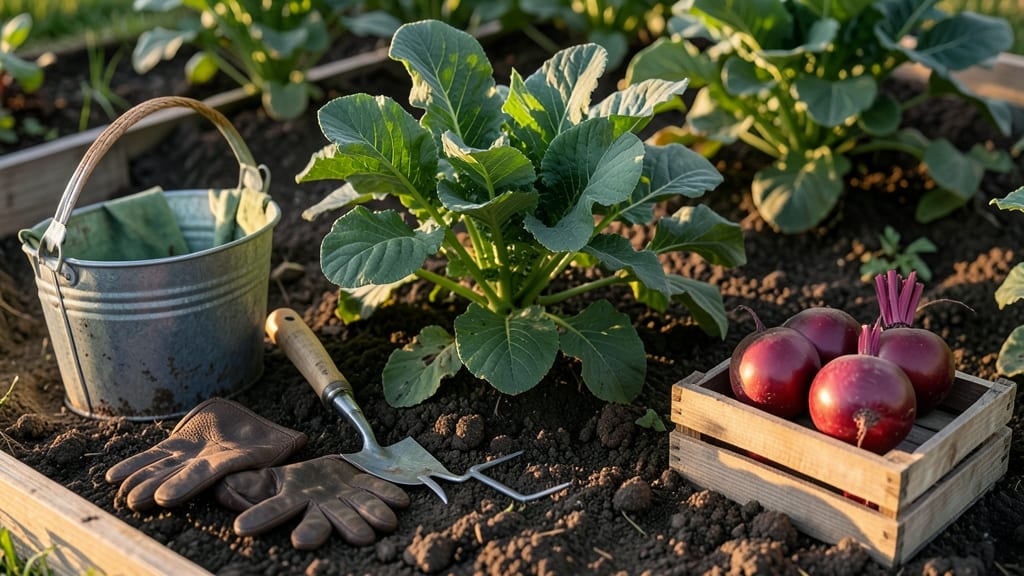
Harvesting beets at the right time means the difference between a tender, sweet root and a tough, woody mess—so timing is everything.
Most gardeners guess when to pull their 🍠, but that’s how you end up with beets that are either too small or past their prime. The secret? Three simple tactile tests that reveal when your beets are perfectly sized, firm, and packed with flavor—no calendar needed.
Whether you’re growing baby beets for salads or full-sized roots for storage, knowing the exact moment to harvest ensures you get the best texture and taste. Below, I’ll walk you through the foolproof methods I use to check beet readiness, plus how seasonal planting affects your harvest window.
Ready to stop guessing and start harvesting like a pro? Let’s dive into the signs that tell you your beets are ready—before they’re ready.
3 Tactile tests to determine when beets are perfectly harvest-ready
Harvesting beets at the right moment transforms them from bland to bursting with sweetness. The key lies in your hands—literally! Instead of relying on days since planting, these three tactile tests let you feel, see, and measure readiness.
I’ve used these methods for years to ensure my beets are tender, flavorful, and free of that dreaded woody texture.
Why guess when you can test? Overwatered or undersized beets often go unnoticed until it’s too late. These simple checks—thumb pressure, leaf resistance, and root size comparison—give you the confidence to harvest at peak perfection.
Whether you’re growing baby beets for salads or storage-sized roots, these tests work for every variety.
- 1 Thumb Pressure Test: Press gently on the beet’s shoulder (where root meets stem). If it resists slightly (like a ripe avocado), it’s ready. If it dents easily, wait 3-5 days.
- 2 Leaf Resistance Check: Tug gently on the outer leaves. Ready beets have sturdy stems that don’t snap. Wilted or yellowing leaves mean harvest now or the beet is past prime.
- 3 Root Size Comparison: Hold the beet against a 1-inch ruler. Baby beets (1–1.5 inches) are ready in 30–45 days. Mature beets (2–3 inches) take 60–70 days. Compare to a golf ball (1.6 inches) for a quick visual cue.
Start with the thumb pressure test—it’s the fastest way to check readiness without digging. I always test a few beets from the same planting to account for size variations.
For example, my Detroit Dark Red beets resist pressure at 2 inches wide, while Babybeat varieties are perfect at 1 inch. Color matters too: deep crimson, gold, or purple hues signal maturity.
Next, use the leaf resistance check to confirm overall plant health. Healthy leaves should feel crisp and upright, not floppy. If the leaves are yellowing at the edges, harvest immediately—the beet’s sugars will start converting to starch, dulling flavor.
This test also helps spot nutrient deficiencies (pale leaves) or overwatering (mushy stems).
The root size comparison is my favorite for visual learners. I keep a small ruler in my gardening tool belt to measure roots in the soil. For storage beets, aim for 2.5–3 inches in diameter—they’ll keep longer and develop deeper flavors.
If you’re growing for quick salads, harvest at 1–1.5 inches for tender, sweet bites.
Pro tip: Harvest on a dry, sunny morning after the soil has warmed. This ensures cleaner roots and preserves flavor. I’ve found that beets pulled in the late afternoon can taste slightly bitter, likely due to heat stress.
Always use a hand fork to loosen soil gently—never pull by the leaves, which can damage the root.
What if your beets fail one test but pass another? For example, the roots are sized right but the leaves feel limp? This usually means overwatering or root-bound conditions.
In this case, harvest immediately and adjust your watering schedule. Conversely, if the roots are small but the leaves are tough, wait 5–7 days—they’ll catch up!
For heirloom varieties like Chioggia or Bull’s Blood, these tests still apply, but flavor peaks slightly later. Their intricate patterns and deeper colors take a few extra days to develop. I’ve learned to trust the thumb pressure over rigid size rules for these types—they’re worth the wait!
Remember: Baby beets (like Little Ball) are ready in 30–45 days, while storage beets need 60–70 days. Use these tactile tests to fine-tune your harvest timing, and you’ll never sacrifice sweetness for size again. Happy digging!
Best harvest times by variety: baby beets vs. storage beets vs. heirloom types
Not all beets are created equal when it comes to harvest timing. Baby beets like 'Baby Keeper' or 'Detroit Dark Red' reach peak tenderness in just 30-45 days, while storage varieties such as 'Chioggia' or 'Golden' need 60-70 days to develop their signature sweetness.
Meanwhile, heirloom types like 'Albina Vereduna' or 'Mangold' can take 50-90 days depending on your climate zone and growing conditions.
Your planting season plays a huge role in timing. Spring-planted beets often mature faster in cooler climates, while fall plantings benefit from extended growing seasons in warm regions.
For example, a Zone 5 garden might harvest baby beets in early June, but a Zone 9 garden could extend harvests into November with proper care.
| Variety Type | Days to Harvest | Best For | Seasonal Adjustments |
|---|---|---|---|
| Baby Beets | 30-45 days | Salads, quick cooking | Spring: 30 days Fall: 40-45 days |
| Storage Beets | 60-70 days | Long-term storage, roasting | Spring: 65 days Fall: 60 days |
| Heirloom Beets | 50-90 days | Unique flavors, heirloom preservation | Spring: 70-90 days Fall: 50-70 days |
For baby beets, I recommend harvesting when roots reach 1-2 inches in diameter. Look for bright green leaves and a slight resistance when you gently squeeze the root through the soil.
In my Zone 6 garden, I often harvest baby beets in late May for spring plantings and early October for fall crops.
Storage beets should have 2-3 inch diameter roots and deep, vibrant colors. These varieties like 'Detroit Dark Red' develop their signature sweetness when left in the ground longer. In cooler climates, aim for harvests just before the first frost to ensure they've developed enough sugars.
I've found that fall-planted storage beets in my garden mature about 10 days faster than spring plantings.
Heirloom varieties often have unique harvest windows. For example, 'Chioggia' beets with their stunning pink-and-white rings need about 60 days, while 'Albina Vereduna' with white rings can take up to 80 days.
Always check the seed packet for specific variety recommendations, as some heirlooms are bred for longer growing seasons or drought tolerance.
Remember that climate affects readiness. In hotter regions, beets may mature faster due to increased soil temperatures, while cooler areas might need an extra week or two. I've learned to adjust my harvest timing based on soil temperature—when it's consistently above 60°F, growth accelerates noticeably.