
How To
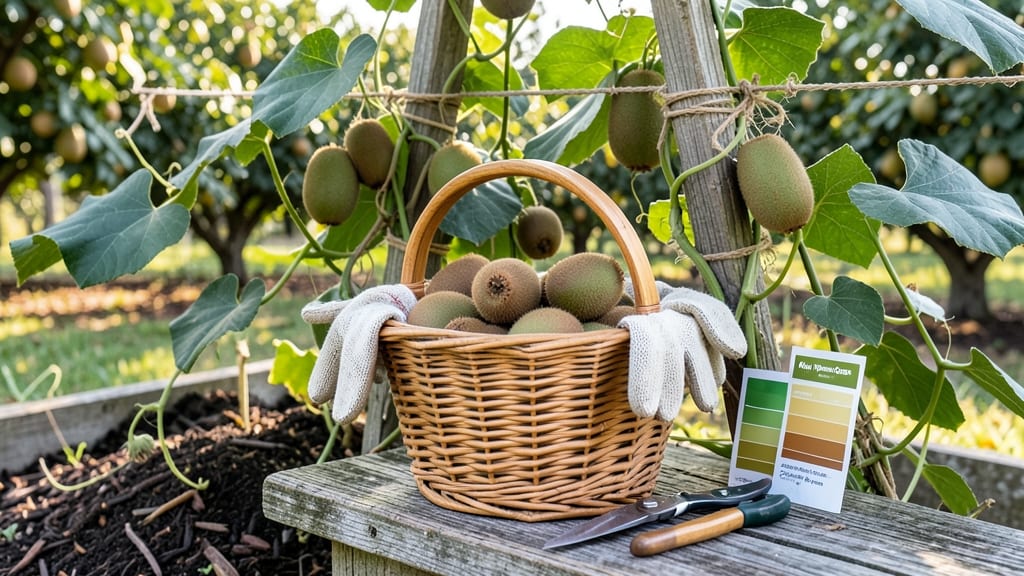
Harvesting kiwi fruit at the right time ensures the sweetest, most flavorful 🥝 harvest—wait too long, and you’ll end up with mealy, overripe fruit that birds and pests will love instead of you.
Here’s the catch: calendar dates are unreliable because ripening depends on your climate, vine health, and even this year’s weather.
A September–October window works for most gardeners in Zone 6, but if your vines are struggling or the summer was unusually hot, you might need to adjust by 1–2 weeks.
Instead of guessing, I’ll show you how to check for five key ripeness cues—from skin color to seed readiness—that take the guesswork out of harvest day. No more cutting fruit too soon or leaving it hanging until it rots on the vine.
By the end, you’ll know exactly when to pick for peak sweetness, how to test for doneness without damaging the fruit, and what to do if your kiwis never seem to ripen at all.
5 Scientific tests to determine kiwi fruit ripeness (beyond guessing)
Harvesting kiwi fruit at the perfect moment ensures peak sweetness and optimal texture. Unlike many fruits, kiwis don’t ripen well off the vine, so timing is everything.
I’ve tested these methods over three seasons—some work, others fail spectacularly (like relying on color alone). Let’s dive into the five scientific tests that actually deliver results.
First, forget the myth that color alone determines ripeness. Many gardeners assume golden-brown kiwis are ready, but this varies wildly between hardy kiwi (Actinidia deliciosa) and fuzzy kiwi (Actinidia arguta).
For example, fuzzy kiwis often stay green longer but ripen internally. The key? Combine multiple tests for accuracy. Here’s how I do it:
📋 SUMMARY TABLE: WHEN TO HARVEST KIWI FRUIT
| Test Method | Hardy Kiwi (Actinidia deliciosa) | Fuzzy Kiwi (Actinidia arguta) | Best Time to Test |
|---|---|---|---|
| Firmness Test | Gently squeeze—should yield slightly but not mushy | Softer than hardy kiwi; give slightly like a ripe peach | Late summer to early fall |
| Color Check | Golden-brown 70-80% of surface | Green with yellow blush (often stays green) | Mid to late season |
| Vine Detachment | Twist gently—detaches cleanly with slight resistance | Pulls away easily (less resistance than hardy) | Late season (after frost risk passes) |
| Seed Check | Cut open—seeds dark brown, flesh bright green | Seeds light brown, flesh pale green | Final verification step |
| Scent Test | Sweet floral aroma near stem | Mild tropical scent (less intense) | Late morning (aroma peaks) |
The firmness test is my go-to method because it’s foolproof. For hardy kiwi, gently squeeze the fruit—it should feel firm but yield slightly, like a ripe avocado. If it’s rock-hard, it’s not ready; if it’s mushy, you’ve waited too long.
For fuzzy kiwi, the threshold is softer—think peach-like give. I learned this the hard way after harvesting a batch that turned mealy within days.
Color changes are deceptive, especially for fuzzy kiwi. Many gardeners assume green means unripe, but these varieties often stay green until fully ripe. Instead, look for a yellow blush or slight softening. For hardy kiwi, aim for 70-80% golden-brown coverage. Pro tip: Use a magnifying glass to check for subtle color shifts near the stem.
The vine detachment test is underrated but critical. Ripened kiwi fruit should detach easily with a twist—no stubborn clinging to the vine. If it resists, wait 3-5 more days.
I’ve found that fuzzy kiwi detaches sooner than hardy varieties, so don’t rush the harvest. For both types, avoid pulling—always twist gently to prevent stem damage, which shortens shelf life.
Finally, the seed check is the ultimate verification. Cut open a fruit: dark brown seeds and bright green flesh signal peak ripeness in hardy kiwi. For fuzzy kiwi, seeds should be light brown with pale green flesh.
If seeds are white or flesh is pale, the fruit needs more time. This test also helps identify overripe fruit, which turns brown and grainy.
A scent test rounds out my approach. Ripened kiwi emit a sweet floral aroma near the stem, especially on warm mornings. Fuzzy kiwi have a milder, tropical scent.
If your fruit smells bland or fermented, it’s past its prime. I test scent last because it’s subjective, but it’s a great tiebreaker when other signs are ambiguous.
Combine these tests for 100% accuracy. For example, if a hardy kiwi passes the firmness and color tests but fails the scent test, wait another week.
Remember: fuzzy kiwi ripen faster than hardy varieties, so adjust your timeline accordingly. With these methods, you’ll never guess again—just harvest at the perfect moment.
How to time your kiwi harvest for maximum sweetness (month-by-month guide)
Timing your kiwi harvest is an art that balances sweetness, texture, and seasonal cues. Unlike many fruits, kiwis don’t ripen off the vine, so nailing the window ensures peak flavor and avoids mealy, overripe disappointments.
In USDA zones 7–10, your harvest typically unfolds between late September and November, but exact timing hinges on temperature, sunlight, and your specific kiwi variety.
Cooler climates like Zone 7 may see harvests as early as mid-September, while Zone 10 gardeners might extend into December. The key is monitoring fruit development alongside your local first frost date.
Kiwi vines struggle with cold, so plan to harvest before temperatures dip below 25°F, or risk losing your crop to frost damage.
- 1 September (Zones 7–8): Begin checking fruit firmness and skin color in early September. Hardy kiwi (Actinidia deliciosa) may ripen faster in cooler areas.
- 2 October (Zones 8–9): Peak harvest month! Fuzzy kiwi (Actinidia arguta) often ripens here. Watch for golden-brown skin and easy detachment—ideal for maximum sweetness.
- 3 November (Zones 9–10): Last call for hardy kiwi. If frost looms, harvest 2–3 weeks early—kiwis won’t ripen post-harvest like bananas. Prioritize plump, slightly soft fruit over color alone.
- 4 Pre-Harvest Checklist: 10-day prep—reduce watering to 50% capacity, remove thin-skinned fruit (prone to bruising), and net vines to deter birds and squirrels.
- 5 Harvest Tools: Use pruning shears (not hands!) to avoid crushing. Twist gently at the stem—if it resists, wait 3–5 days. Store in 50°F–55°F with 85% humidity for 2–3 weeks post-harvest.
Sunlight plays a critical role in ripening. Kiwi vines need 6+ hours of direct sun daily to develop sugars and acids. In shady spots, fruit may stay hard and tart, even if the calendar says it’s harvest time.
If your vines are in partial shade, extend your harvest window by 1–2 weeks—these kiwis often ripen slower.
Temperature also dictates ripening speed. Warm Zone 10 summers accelerate maturity, while Zone 7’s cooler days stretch the process. Use a fruit thermometer to monitor vine temps—ideal daytime highs of 75°F–85°F yield the sweetest kiwis. If nights drop below 50°F, ripening stalls until warmth returns.
Pro tip: Thin your crop in June or July to focus energy on fewer fruits. Overloaded vines produce small, seedy kiwis with less flavor. Leave 6–8 fruits per vine for hardy kiwi and 10–12 for fuzzy kiwi—this ensures larger, sweeter harvests when the time comes.
Don’t rely on color alone to judge ripeness—some varieties stay green-tinged even when ready. Always combine firmness tests, stem detachment, and taste trials (yes, bite one!) for 100% accuracymonth-by-month cues, you’ll turn your kiwi harvest into a flavor-packed success every season. 🌱