
Plants
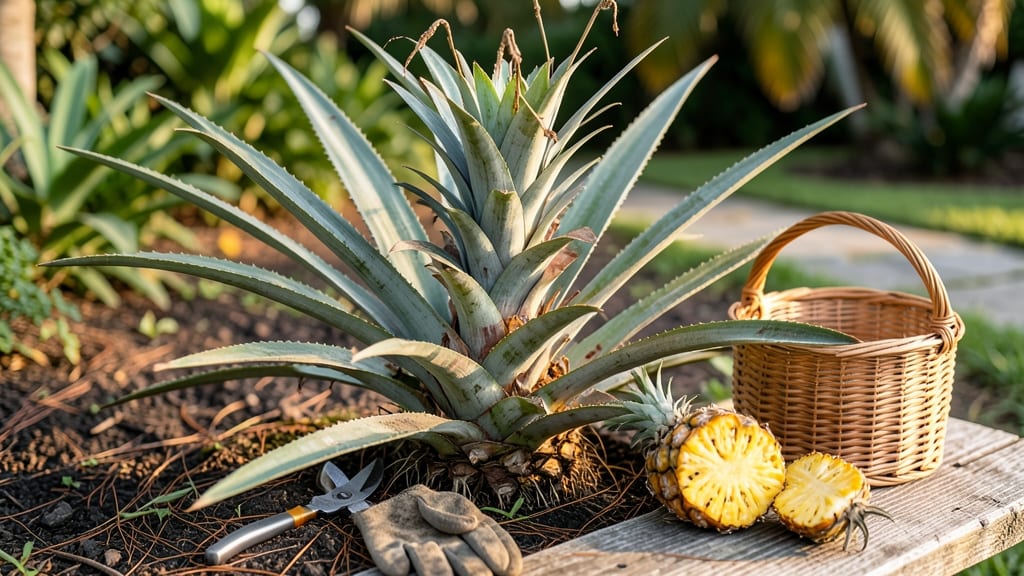
Harvesting a pineapple plant at the right time means the difference between a sweet, juicy fruit 🍍 and a sour disappointment.
You’ve waited 18-24 months for that golden crown to form, but how do you know it’s truly ready?
The answer lies in three key signals: the color of the fruit, the slip leaf test, and the weight in your hand—each one a clue that your pineapple is finally at peak ripeness.
In tropical zones 10-12, harvest happens year-round, while container growers in cooler climates should aim for late summer or early fall. Missing these cues can mean fruit that’s either too tart or too soft, and no one wants that. Here’s how to spot the perfect moment—before it’s too late.
Below, I’ll walk you through the leaf slip test, weight tricks, and regional adjustments to ensure you harvest at the sweetest possible moment. No guesswork, just delicious results.
How to use the leaf slip test for perfect pineapple harvest timing
The leaf slip test is the gold standard for determining when your pineapple is ready to harvest. Unlike guessing by color or size, this method focuses on the slip leaf—a small, brown leaf that forms at the base of the fruit.
When this leaf begins to dry out and slip, it signals the fruit is nearing peak ripeness. Mastering this test ensures you enjoy the sweetest, juiciest pineapple possible without waiting too long or picking too soon.
Pineapples typically take 18-24 months to mature, but the slip leaf test cuts down on guesswork. The key is watching for three critical changes: the leaf turning brown, the fruit becoming slightly softer, and the base loosening from the plant.
These visual cues work for both container-grown and in-ground pineapples, making it a universal method for gardeners in USDA zones 10-12 or those growing pineapples indoors.
Here’s how to perform the test step-by-step to avoid common mistakes like harvesting too early or missing the perfect window:
- 1 Identify the slip leaf: Locate the small, brown leaf at the base of the fruit. This is your harvest indicator.
- 2 Check for browning: The slip leaf should turn dry and brown. If it’s still green, wait 1-2 weeks.
- 3 Test for slippage: Gently twist the fruit. If it slips easily from the plant, it’s ready. If it resists, wait 3-5 days.
- 4 Confirm with aroma: A sweet, tropical scent near the base means the fruit is ripe. No smell? Wait longer.
- 5 Harvest immediately: Cut the fruit 1-2 inches above the base using a sterilized knife to avoid rot.
The slip leaf test is especially useful for container-grown pineapples, where environmental conditions like temperature fluctuations can delay ripening. In cooler zones (like USDA zone 9), pineapples may take longer to develop the slip leaf, so patience is key.
If you’re growing dwarf varieties, the slip leaf will still appear but may be harder to spot due to the plant’s smaller size.
Color alone isn’t enough to determine ripeness. A pineapple might look golden-yellow but still be hard and tart if the slip leaf isn’t brown. Conversely, a reddish pineapple (like the Queen variety) might be ripe even if the fruit isn’t fully yellow.
Always combine the slip leaf test with fruit firmness and aroma for the most accurate results.
One common mistake is overestimating ripeness by relying solely on the fruit’s color. Some gardeners pick pineapples too early because they assume a yellow hue means readiness, only to find the fruit is underripe and sour.
The slip leaf test eliminates this guesswork by providing a clear, physical cue that the fruit is ready to harvest.
If you’re growing pineapples in containers, monitor the slip leaf more frequently because root-bound stress can accelerate ripening. In tropical climates, the slip leaf may appear faster due to consistent warmth and humidity.
For indoor growers, ensure your pineapple gets 6+ hours of sunlight daily—without enough light, the slip leaf might never fully develop.
Once you’ve confirmed the slip leaf is brown and the fruit slips easily, harvest within 24 hours to preserve sweetness. Store your pineapple at room temperature for up to a week or refrigerate to extend its shelf life.
Avoid cutting it open until you’re ready to eat, as exposure to air speeds up spoilage.
Practicing the slip leaf test will give you confidence in your harvest timing, ensuring every pineapple you grow is sweet, juicy, and at peak flavor. With patience and attention to these visual cues, you’ll never miss the perfect moment to pick your homegrown tropical treasure again. 🍍
Pineapple fruit weight & size guidelines for optimal ripeness
Determining the perfect time to harvest your pineapple isn’t just about the leaf slip test—it’s also about understanding the weight and size of the fruit. A ripe pineapple should feel heavy for its size, signaling high sugar content.
For most varieties, a ripe pineapple typically weighs between 2 to 4 pounds, though dwarf varieties may be smaller.
Size matters too! The ideal diameter for a fully ripe pineapple ranges from 6 to 8 inches across the base. Smaller fruits might not have developed their full sweetness, while oversized pineapples can sometimes be less flavorful.
Always check the base color—it should turn golden-yellow or brownish-red, depending on the variety, before relying solely on weight.
Variety-specific guidelines help narrow down the perfect harvest window. For example, the Smooth Cayenne (a common variety) usually reaches 3 to 4 pounds at peak ripeness, while Queen pineapples tend to be lighter, around 1.5 to 2.5 pounds. Dwarf varieties like Sugarloaf often stay under 2 pounds but pack just as much flavor.
| Variety | Ideal Weight | Size (Diameter) | Firmness Test |
|---|---|---|---|
| Smooth Cayenne | 3–4 lbs | 6–8 inches | Slightly soft at base |
| Queen | 1.5–2.5 lbs | 4–6 inches | Gently yielding |
| Sugarloaf (Dwarf) | 1–2 lbs | 4–5 inches | Firm but not hard |
| Red Spanish | 3–5 lbs | 7–9 inches | Base slips easily |
A ripe pineapple should also feel slightly soft when pressed gently at the base—like a ripe avocado. If it’s too firm, it’s not ready, and if it’s mushy, it’s overripe. Pair this with the leaf slip test (a brown, easily removable leaf at the base) for foolproof results.
Regional climates can affect ripening speed, so adjust your expectations if you’re in a cooler zone.
Pro tip: Harvest in the morning when temperatures are cooler to preserve freshness. Cut the fruit 1 inch above the base using a clean knife, leaving the crown intact if you plan to propagate.
Store harvested pineapples at room temperature for a few days to let residual sugars develop before refrigerating.
Don’t let indecision cost you a sweet harvest—trust your hands and eyes, and you’ll know exactly when that pineapple is ready to enjoy! 🍍