
How To
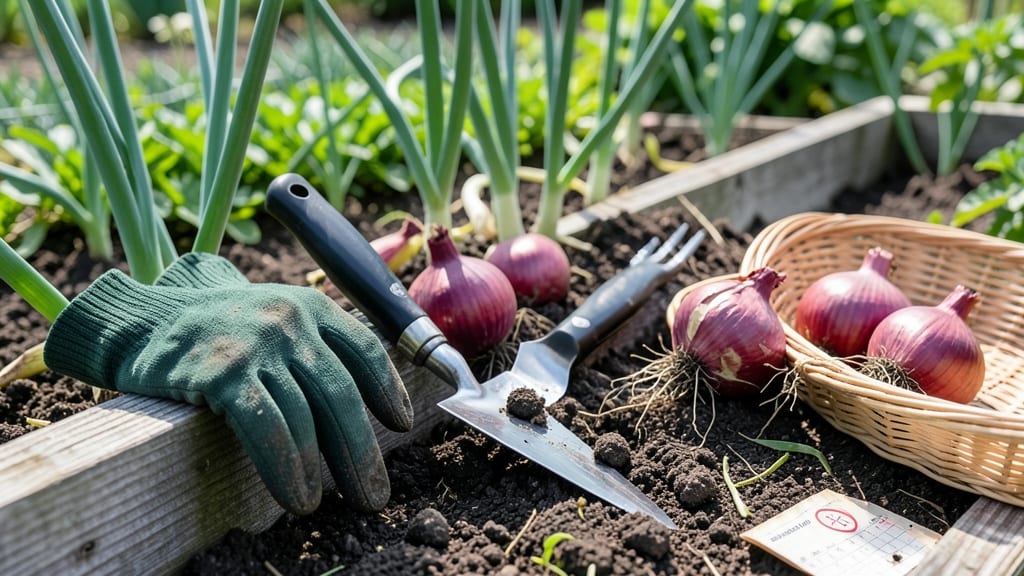
Harvest red onions when the tops yellow and fall over 🧅—this is the sweet spot for peak flavor and storage life.
Picture this: you’ve nurtured your red onions all season, only to pull them too early and find small, pungent bulbs—or worse, leave them too long and end up with tough, woody messes. Knowing the exact moment to harvest makes all the difference.
Look for bulbs about 1-2 inches in diameter with a dry, papery skin that peels easily. These visual cues tell you the onions are ready to pull, not a day too soon or late.
In this guide, I’ll walk you through the foolproof signs, seasonal timing, and how to store your harvest so they last all winter—no guesswork, just perfect onions.


How to identify perfect red onion harvest time using rootball size
Harvesting red onions at the right time ensures sweet, flavorful bulbs instead of tough, pungent ones. The rootball size is your best friend—it tells you when the bulb has matured enough for peak taste and storage.
Unlike green onions, red onions develop a full bulb underground, and checking its diameter is the first step in mastering harvest timing.
Most red onion varieties need 90-120 days to reach maturity, but rootball size is a more reliable indicator than days alone. A bulb with a 1-2 inch diameter (about the size of a golf ball) is typically ready.
Smaller bulbs lack flavor, while larger ones may become woody. I’ve learned the hard way—overgrown onions taste bitter and store poorly!
Here’s how to check the rootball without damaging the plant: gently loosen the soil around the base with your fingers. If the bulb is round and firm, it’s maturing well. Avoid digging up the entire plant until you’re certain—disturbing the roots can stress the onion and delay maturity.
Watch for leaf yellowing as another key sign. When about half the tops turn yellow and flop over, the bulb is nearing harvest readiness. This happens naturally as the plant redirects energy from leaves to bulb development.
In my garden, I mark plants with small stakes when the tops first yellow to track progress.
Don’t rely solely on leaf color, though. Some varieties like ‘Red Creole’ may show yellowing earlier but need larger rootballs. Always combine rootball size and leaf condition for accuracy. Pro tip: Use a ruler or caliper to measure bulbs—it’s more precise than eyeballing!
The neck of the onion (the stem where leaves meet the bulb) also gives clues. When it tightens and starts to dry, it’s a final sign of readiness.
I test this by gently squeezing the neck—if it feels firm and papery, the bulb is perfect. This method works even if the rootball isn’t fully visible.
Seasonal timing matters too. In cool climates (Zones 3-5), harvest red onions in late summer (August-September) when days shorten. In warm climates (Zones 8-10), they may mature earlier (June-July).
I’ve grown red onions in both zones and found that soil temperature (ideal: 60-70°F) affects rootball development more than calendar dates.
Avoid harvesting when the outer skin splits or the bulb feels soft—this means it’s overripe. Split skins let moisture escape, causing the onion to spoil quickly.
If you see splits, harvest immediately, even if the rootball isn’t perfect. You can still use these onions fresh (like in salads) but avoid storing them.
For long-term storage, cure harvested onions by laying them in a dry, shady spot for 2-3 weeks. This hardens the skin and prevents rot. I use a mesh bag in my garage—it’s dark enough but gets airflow.
Never store onions with apples or potatoes, as these release gases that speed up spoilage.
Remember: harvesting too early gives you small, mild bulbs, while harvesting too late results in tough, pungent ones. The rootball size is your best guide—when it’s 1.5-2 inches wide and the leaves are mostly yellow, you’ve got it right. Now go check your garden—those red onions won’t harvest themselves! 🧅
Paper-thin skin & other proven red onion harvest tricks
Beyond just checking the rootball size, mastering the art of harvesting red onions means paying close attention to subtle clues like skin thickness and leaf color. These details often reveal whether your onions are truly ready—or still need time to mature.
Start by gently squeezing a bulb. If the outer skin feels paper-thin and peels away easily, that’s your cue to harvest. Thicker, flexible skin means they need more time in the ground. This simple test saves you from pulling onions too early or too late.
Another trick is the finger pull test. Gently tug on the green tops—if they come out cleanly with minimal resistance, the bulb is ready. If the tops stay firmly attached, wait a few more days. This method ensures you don’t damage the bulb while checking readiness.
⚠️ WARNING: Harvesting at the Wrong Time ⚠️
Seasonal adjustments matter too. In hot climates, onions mature faster—check them every 3-5 days in late summer. In cooler regions, extend your harvest window into early fall, as bulbs develop more slowly. Always harvest on a dry, sunny day to prevent rot during curing.
For long-term storage, cure harvested onions by laying them in a shady, well-ventilated spot for 2-3 weeks. This dries the skins further, preventing spoilage. Store cured onions in a cool, dark place with good airflow—this keeps them crisp and flavorful for months.
Pro tip: Save a few bulbs to replant in fall. These overwintered onions often produce sweeter, milder flavors the following spring. Just cover them lightly with mulch and protect from freezing temps.