
How To
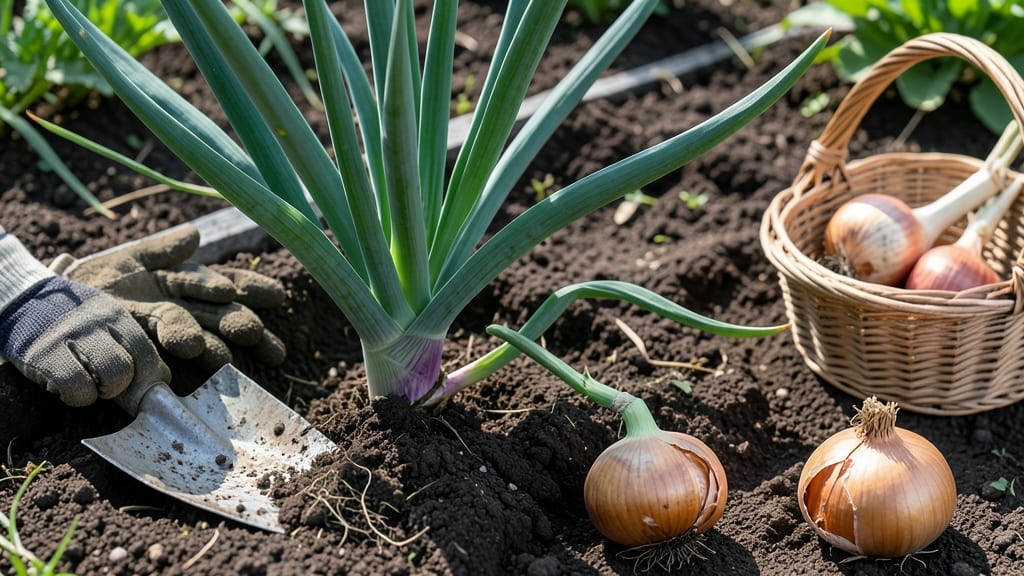
Telling when to harvest onions means watching for the right mix of bulb size, leaf color, and neck tightness—not just days after planting.
Picture this: you’ve spent months tending to your 🧅, and now the tops are yellowing while the bulbs still feel soft. That’s the moment you need to act—or risk ending up with tough, pungent onions that won’t store well.
The key is knowing the 5 foolproof physical cues that signal perfect harvest timing, whether you’re growing storage onions or green scallions.
Most gardeners wait too long, assuming bigger bulbs mean better flavor. But onions left in the ground past their prime develop woody centers and lose their sweetness. Meanwhile, harvesting too early means small, underdeveloped bulbs that won’t keep.
The solution? Learn to read your plants like a pro, from the moment the tops start drying to the exact moment the neck tightens.
In this guide, I’ll break down the top 5 visual and tactile signs to pull onions at their peak—plus how to adjust for your climate and variety. No more guesswork, just perfect harvests every time.
5 Physical signs your onions are ready for harvesting
Knowing exactly when to harvest onions can transform your garden from a gamble to a guaranteed harvest. Overripe onions become tough and pungent, while underripe bulbs stay small and watery. The key lies in these physical cues that signal perfect harvest timing—no guesswork required.
I’ve learned from years of gardening that these signs work for both storage onions and green onions, though with slight variations.
Timing matters because onions continue to grow even after they’ve reached their ideal size. If left too long, they’ll split or rot in the soil. But if harvested too early, they won’t store well and lack flavor.
The good news? Your onions will tell you when they’re ready—you just need to know what to look for. Let’s break down the five foolproof signs that guarantee you’ll pull onions at their peak.
🌱 Numbered Highlights: How to Tell When Onions Are Ready
-
1. Tops Turn Yellow and Begin to Flop
The top leaves (the green part) will start yellowing from the bottom up, eventually falling over. This means the bulb below has stopped growing and is ready for harvest. -
2. Bulbs Feel Firm and Round When Gently Squeezed
Dig up one onion and squeeze the bulb. If it feels solid and round (not soft or spongy), it’s ready. A soft bulb means it’s still growing. -
3. Neck of the Bulb Tightens and Papery Skin Forms
The neck (where the bulb meets the green leaves) will tighten, and the skin will turn papery and dry. This is nature’s way of sealing the bulb for storage. -
4. Leaves Wilt and Die Back Naturally
The outer leaves will wilt and dry out, while new leaves stop emerging. This is a clear sign the bulb has reached maturity. -
5. Bulbs Reach 1-2 Inches in Diameter
For storage onions, aim for bulbs that are 1-2 inches wide. Smaller bulbs (under 1 inch) are better used fresh or as green onions.
Pro Tip: Test one bulb by digging it up and checking its readiness. If it’s perfect, harvest the rest!
Let’s dive deeper into each of these signs, because some are more obvious than others. For example, the yellowing tops are the easiest to spot, but the papery skin is the most reliable indicator for storage onions.
I once missed this cue and ended up with onions that sprouted in storage—not ideal! The papery skin forms as the bulb matures, acting like a natural protective layer.
Another critical detail is the firmness of the bulb. A ready onion should feel solid when gently squeezed—almost like a small, round ball. If it feels soft or mushy, it’s either not ready or has started to rot.
This tactile check is especially useful for red or yellow onions, which can be trickier to judge by appearance alone. I always dig up a test onion to confirm before harvesting the entire patch.
The neck tightening is a subtle but crucial sign. When the neck between the bulb and leaves shrinks, it means the bulb has stopped growing upward and is now focusing on storage. This is your green light to harvest.
Ignore this sign, and you risk bulbs splitting or becoming too large for storage. I’ve seen this happen with storage varieties like ‘Yellow Sweet Spanish’—they get massive if left too long!
Don’t overlook the leaf condition either. Healthy, mature onions will have dry outer leaves while still maintaining some green inner leaves. If all the leaves are still upright and green, the bulb isn’t ready.
But if they’re yellowing from the bottom up, that’s your cue. This process usually takes 2-3 weeks before harvest, depending on your climate.
For green onions (scallions), the rules are slightly different. You’ll harvest them when the white bulb is ½-inch to 1-inch wide, and the green tops are 6-8 inches tall.
Unlike storage onions, green onions don’t need to mature fully—they’re harvested for their tender leaves and small bulbs. I often snip them from the same patch, leaving the storage onions to mature.
One common mistake I see is waiting until the entire plant is brown and crispy. By then, the bulbs are often overmature and tough. The goal is to harvest when the tops are mostly yellow but still slightly green at the base.
This balance ensures the best flavor and texture. If you’re unsure, err on the side of harvesting a little early—onions continue to dry out after pulling, so you can always let them cure longer.
Finally, consider your climate and variety. In hot, dry climates, onions mature faster, while cooler, wetter conditions slow down the process. Short-day onions (like ‘Texas Early White’) need 10-12 hours of daylight to bulb properly, while long-day onions (like ‘Sweet Sandwich’) thrive in 14+ hours of daylight.
Knowing your variety’s needs helps you predict harvest timing more accurately.
Armed with these five physical signs, you’ll never second-guess your onion harvest again. The key is to check regularly and act when you see these cues. Happy harvesting—your kitchen (and your taste buds) will thank you! 🧅
When to harvest green vs. storage onions: key differences
Knowing when to harvest green onions (scallions) versus storage onions can make all the difference in flavor and storage life. These two types have completely different readiness cues, so timing matters.
Green onions are harvested young, while storage onions need full maturity. Let’s break down the key differences so you never miss the perfect moment.
For green onions, you’ll harvest them before they bulb up, typically 6-8 weeks after planting. Look for tender green stems that are 6-12 inches tall with no thick base. Storage onions, on the other hand, need full maturity—usually 100-120 days—to develop their signature flavor and storage potential.
Soil conditions also play a critical role. Green onions thrive in consistently moist soil but can be harvested as needed. Storage onions, however, need well-drained soil and dry weather just before harvest to cure properly. Let’s compare these key factors in detail below.
One of the easiest ways to test if storage onions are ready is to gently squeeze the bulb. If it feels firm and round with a tightened neck, it’s time to harvest.
For green onions, simply pull them when the stems reach your desired length—no need to wait for bulbs to form.
Weather plays a huge role in harvest timing. Storage onions should be harvested on dry, warm days in late summer to prevent rot during curing. Green onions, however, can be harvested anytime the stems are tender, regardless of weather.
This flexibility makes them perfect for continuous harvests throughout the growing season.
If you wait too long to harvest storage onions, they’ll split or rot in the ground. But if you harvest too early, they won’t store well. For green onions, the opposite is true—harvesting too late means tough, woody stems.
Pay attention to these cues, and you’ll always get the perfect onion—whether you’re using it fresh or storing it for later.